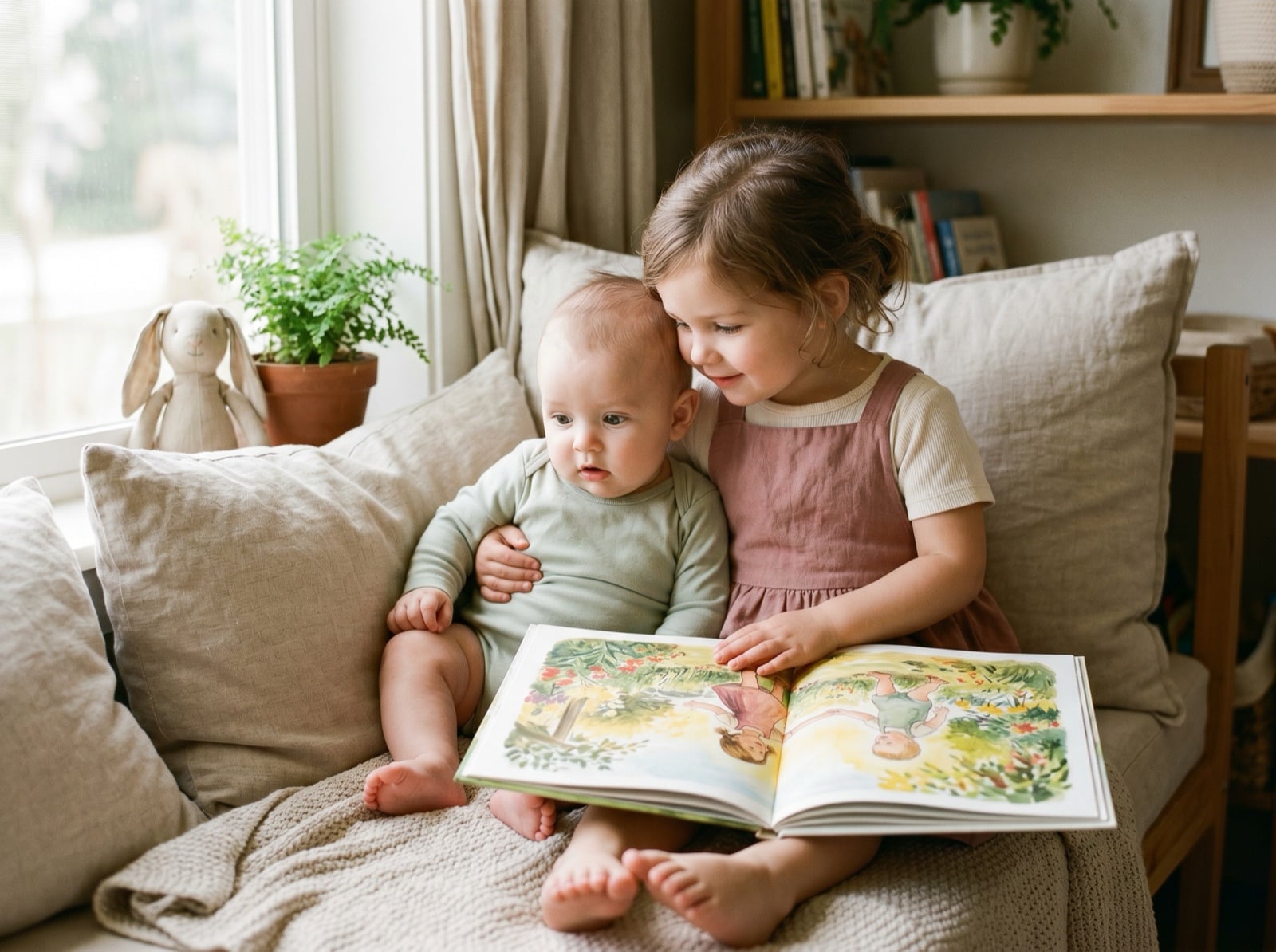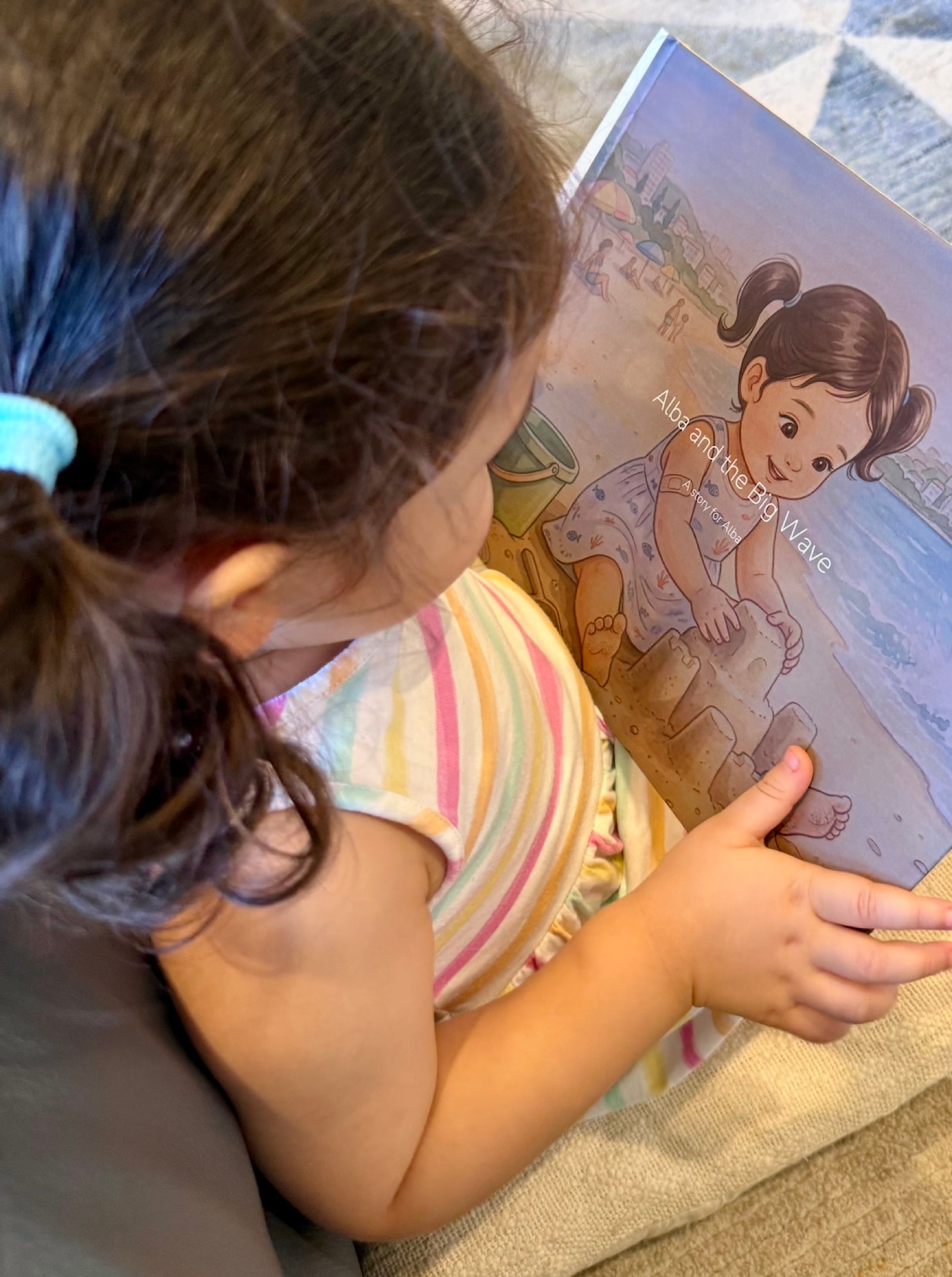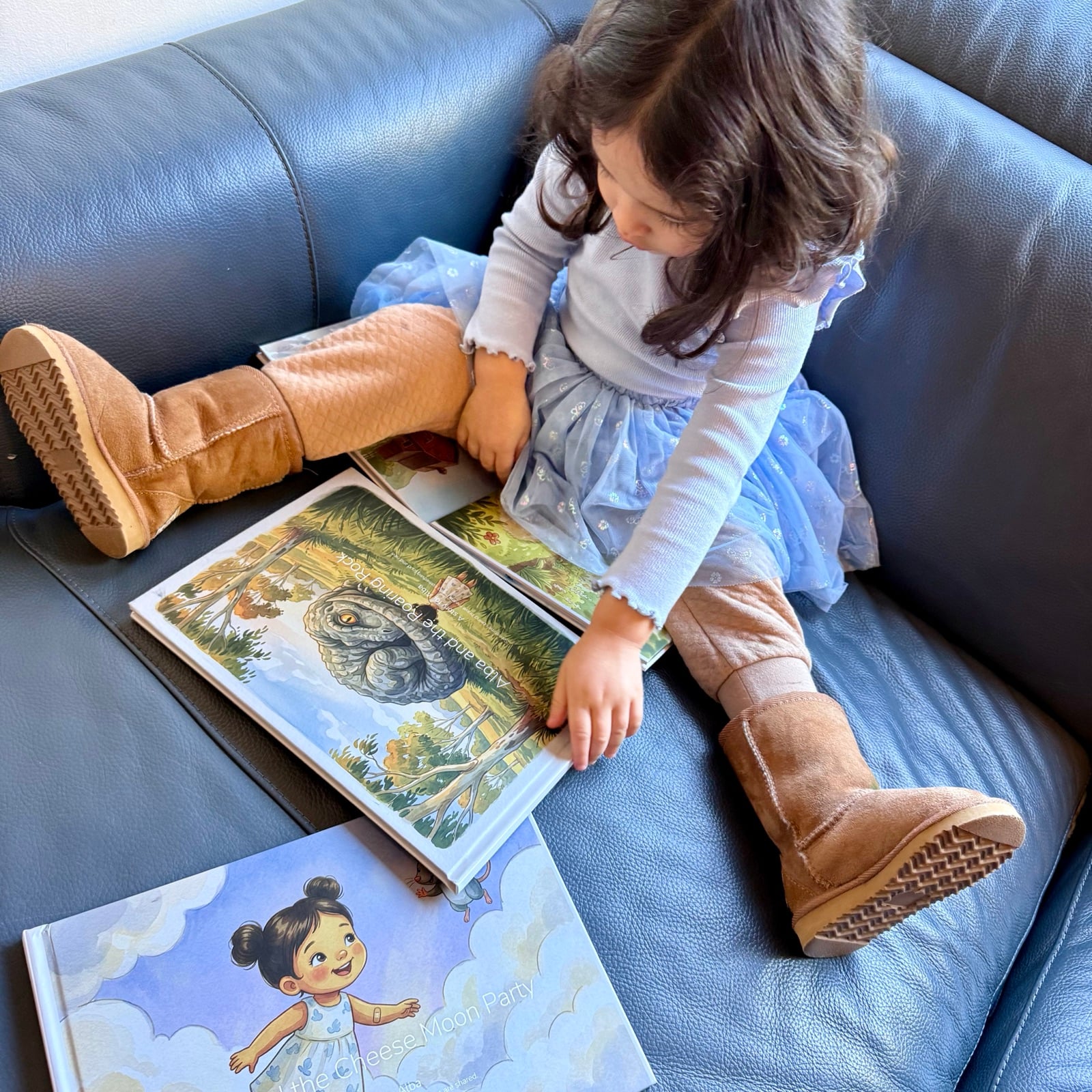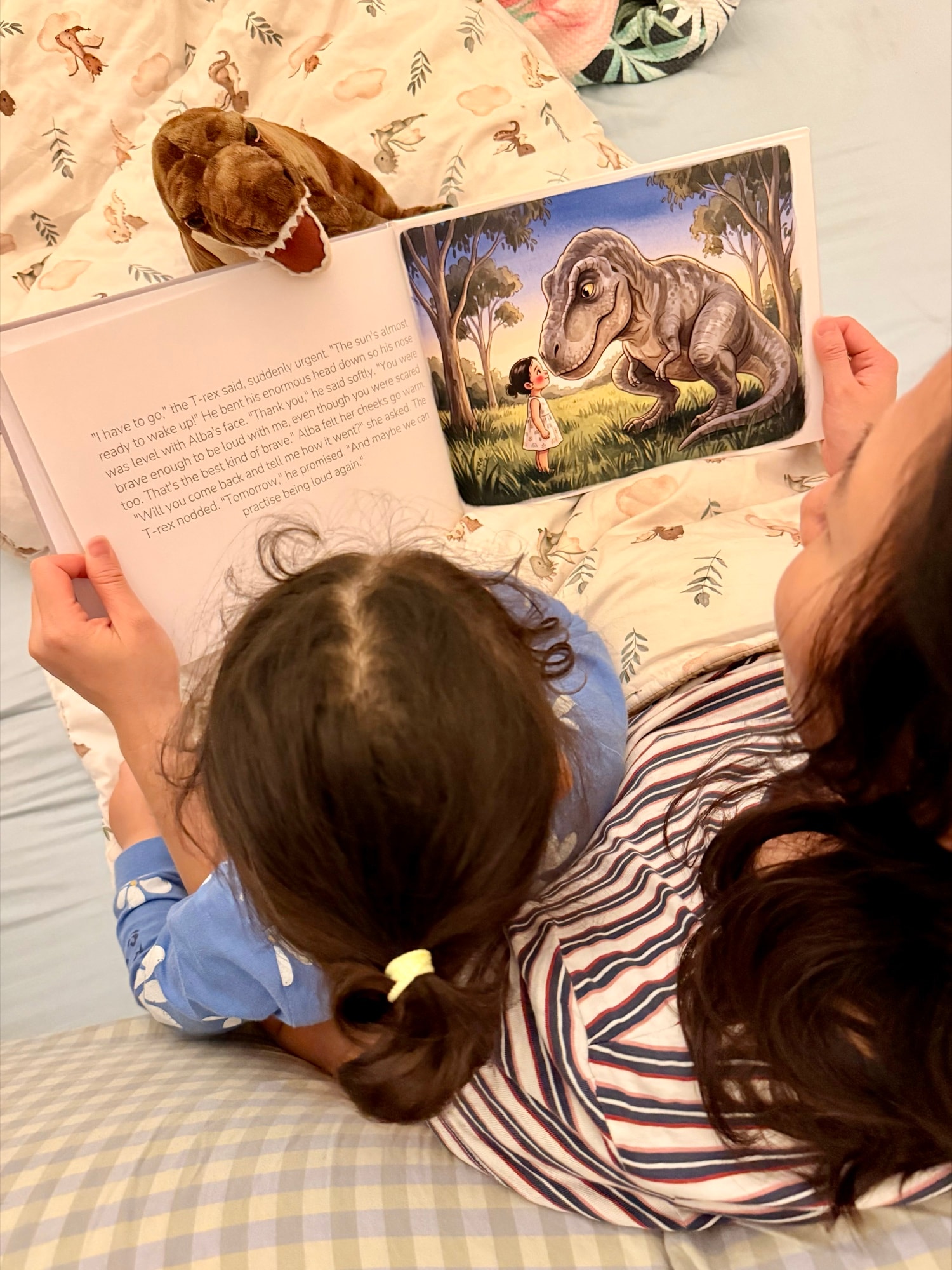
Our daughter is two, and we've been teaching her to count. With toddlers, this kind of thing lands in pieces; she picks it up, drops it, picks it up again when she comes across something she wants to count. The piece that's stuck hardest came through a book Ellen made her about a secret garden full of bunnies. The pages have so many bunnies on them that she counts them out loud through every spread, one by one, every night. The book didn't teach her to count. We had been teaching her. The book gave her a page she chose to come back to, full of the thing she loves right now, and the counting clicked there because she practised it there more than anywhere else.
That's the shape this piece is about. Personalised children's books don't teach a child to read in the way a phonics programme does, and they don't do the work a parent does reading aloud every night. They do something quieter alongside both, and, we'd argue, more durable: they hold a child's attention long enough that whatever you're already teaching them has a page they choose to come back to, every night.
The short answer
Do personalised books actually help with reading?
Yes, with a caveat. The mechanism isn't a literacy programme. It's engagement. A child re-reads a book that's about them more often than a book that isn't, and re-reading is how early reading skills land. The personalisation buys the re-reads, and the re-reads do the work.
What the research actually shows
Three things developmental research has established about young children, books, and personalisation.
1. Children attend to their own name from very early on.
Studies of infant attention go back decades. Babies start orienting to the sound of their own name as early as four to five months, more reliably than to other names with the same stress pattern. By the time a child is two and seeing their printed name on every page of a book, the own-name pull is years deep. It's one of the strongest attention hooks a children's book can use, and it works long before the child can read the name themselves.
2. Self-recognition in pictures clicks between 18 and 30 months.
The textbook developmental timeline goes mirror first, then photographs.1 By two, most children point at a photo of themselves and say their own name. A photo-personalised book meets that cognitive milestone in a way few other reading surfaces do. The child sees themselves on every page, recognises the kid in the picture as them, and the book becomes about them in a way no generic story can match.
3. Personalisation increases engagement in early reading research.
Across the body of research on personalised children's reading, the consistent finding is that children engage more with personalised stories than with non-personalised ones: longer attention, more questions during the read, more re-reads in the weeks that follow. Natalia Kucirkova2, a developmental researcher whose work on this question spans more than a decade (currently at the Open University in the UK and Stavanger University in Norway), is the name that comes up most often in the area. The mechanism researchers point to is engagement, not skill acquisition. The skill comes along because the engagement is there.
Why engagement is the mechanism
Re-reading is how young children learn to read. Every time a child opens the same book again, more of the words land, more of the structure lands, more of the sentence rhythm lands. The book on the bedside table that gets opened most often is the book teaching them the most.
Generic books get picked up some nights. A book that's about them gets picked up most nights, especially in the months after it first arrives at the house. That's the gap personalisation closes. Not by teaching the child anything directly, but by buying them another twenty or fifty re-reads of a book whose pages they already know they want to come back to.
A short list of the engagement levers a personalised children's book stacks, that a generic one doesn't:
- The child's name printed on the cover and across the spreads
- A character on every page who looks like them
- A story that hooks onto something they already love (a current obsession, a favourite toy, a colour they have fallen for)
- A lesson the parent has chosen because it matches what is going on at home or at daycare
None of those individually is the trick. Stacked together, they buy a book a different kind of place in the night-time rotation.
Reading her own name first
There is a well-documented approach to teaching very young children to read, and it starts with the simplest text they will ever encounter: their own name. Children who can read their own name before they can read anything else get a foothold on letters earlier, and the rest of the alphabet follows from there. It is one of the most reliable starting points a parent has for teaching reading at home.
We started doing this with our daughter when she was a bit younger, pointing at her name on cards, on her drink bottle, on her bedroom door, on every page of her personalised books. The first letter clicked first. The "A" became a game; she would point to it on every spread, every billboard, every cereal box. Then the next letter started to click. Then the next. She is two. She is not reading full words yet. But she now spots her own name in any written text she comes across, and her letters are starting to show up in other words on the page.
The interesting part is which book gets the most letter-finding time. It is not the classics that come off the shelf one in five nights. It is the books with her name on every spread, which is to say her personalised ones. They are the daily-encountered text in her life. The repetition compounds. The name on every spread becomes the alphabet game; the alphabet game becomes the entry point to reading the rest of the words on the page.
It sounds basic; it is just her name. That is exactly the point. Her name is the most motivating piece of text a young child can encounter, and meeting it on every page of a book she loves is the fastest way we have found to get her excited about understanding any of the other words on the page.
What this doesn't mean
A few honest caveats, because we would rather say them up front than have you discover them on your own.
- A personalised book is not a literacy programme. It does not replace a daily reading habit, or classics, or board books, or whatever else is on the shelf. It is a piece of the reading life, not the whole one.
- A personalised book will not teach a non-reading child to read. The mechanism is engagement, and engagement only does work when the child is at an age where the words and pictures are starting to mean something. Below 18 months it is a keepsake first, and the read follows later.
- The research is about personalisation in general, not about Almia specifically. We have watched our own daughter's counting come along through her bunnies book, and the mechanism research describes is the one we built Almia around. Every specific outcome will be individual to the child and the book.
What we built around this at Almia
Almia's design choices map onto what the engagement research already rewards.
- One specific child on every page, drawn from a photo of them. Self-recognition is the strongest engagement pull a children's book has, and photo-personalisation extends it across all 26 pages, not just the cover.
- Their name reused across the text, not only the title. The own-name effect kicks in across the whole book, so every spread reuses the child's name where the story allows it.
- A story written around what they are obsessed with right now. Engagement starts with what the child already cares about. The bunny-obsessed two-year-old gets a bunny book; the T-rex-obsessed one gets a T-rex book. The lesson rides along with what already has their attention.
- A lesson the parent chooses, woven into the plot. A sharing book lands hard when the parent picks sharing because sharing is the live issue at daycare. The personalisation reaches the story, not just the cover and the character.
None of this is a magic trick. It's an applied take on what early-reading research already says about engagement and repeat reading, packaged as a hardcover the child wants to open tonight. The book becomes the one they ask for, and the reading takes care of itself in the weeks that follow.
When Ellen made her the T-rex book about sharing, after daycare flagged that sharing toys had been tricky, the lesson clicked through the book in a way it had not clicked through us talking about it. When she made the bunnies-in-a-secret-garden book during her bunny phase, the counting came along for the ride. Both reactions are individual, and we cannot promise either for any other child. But the mechanism is well-established, and we have watched it run in our own house.
Frequently asked
Do personalised children's books help kids learn to read?
At what age does a personalised book start helping with reading?
Are personalised books better than reading apps for early literacy?
Should I replace classics with personalised books?
Do personalised books still work for kids who are already reading on their own?
Does the personalisation really make a difference, or is it the story that matters?
Ellen & Diego, Founders of Almia