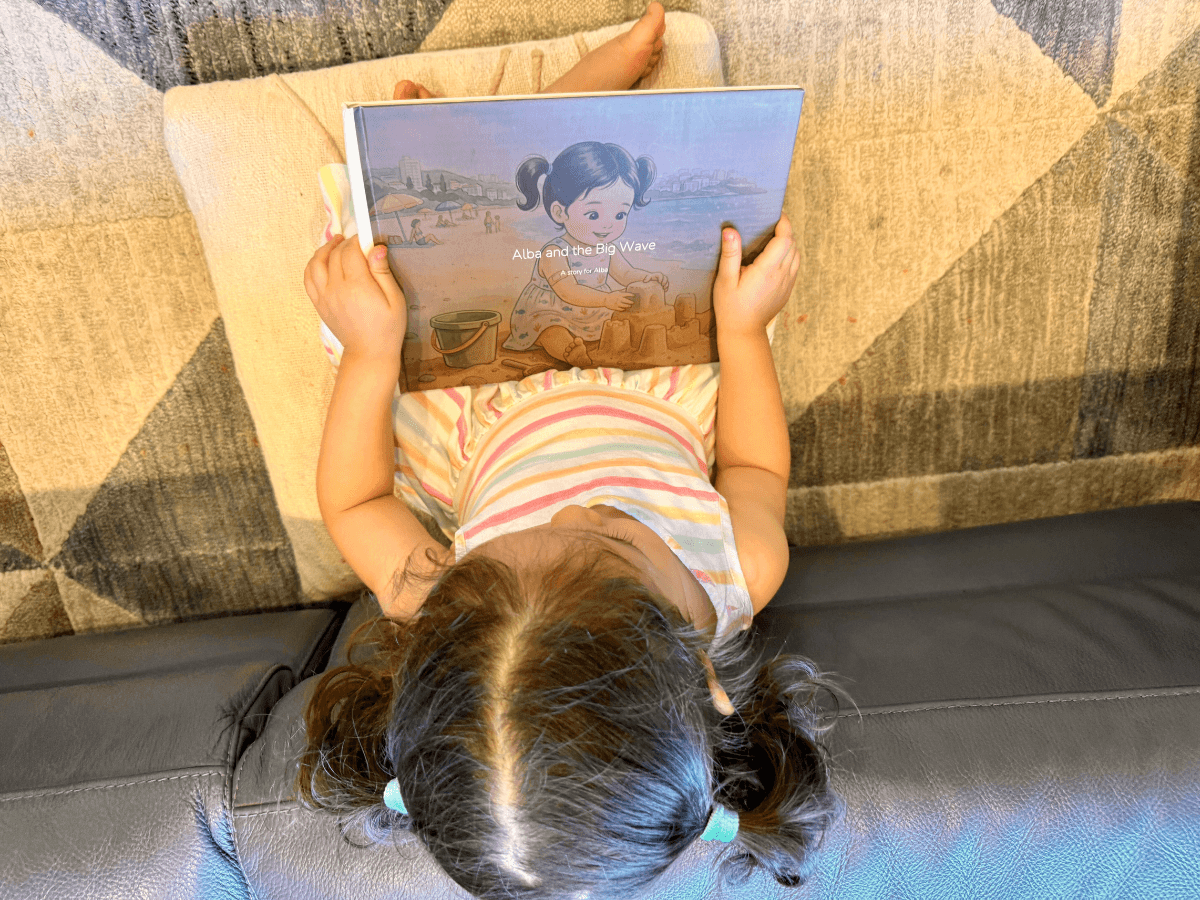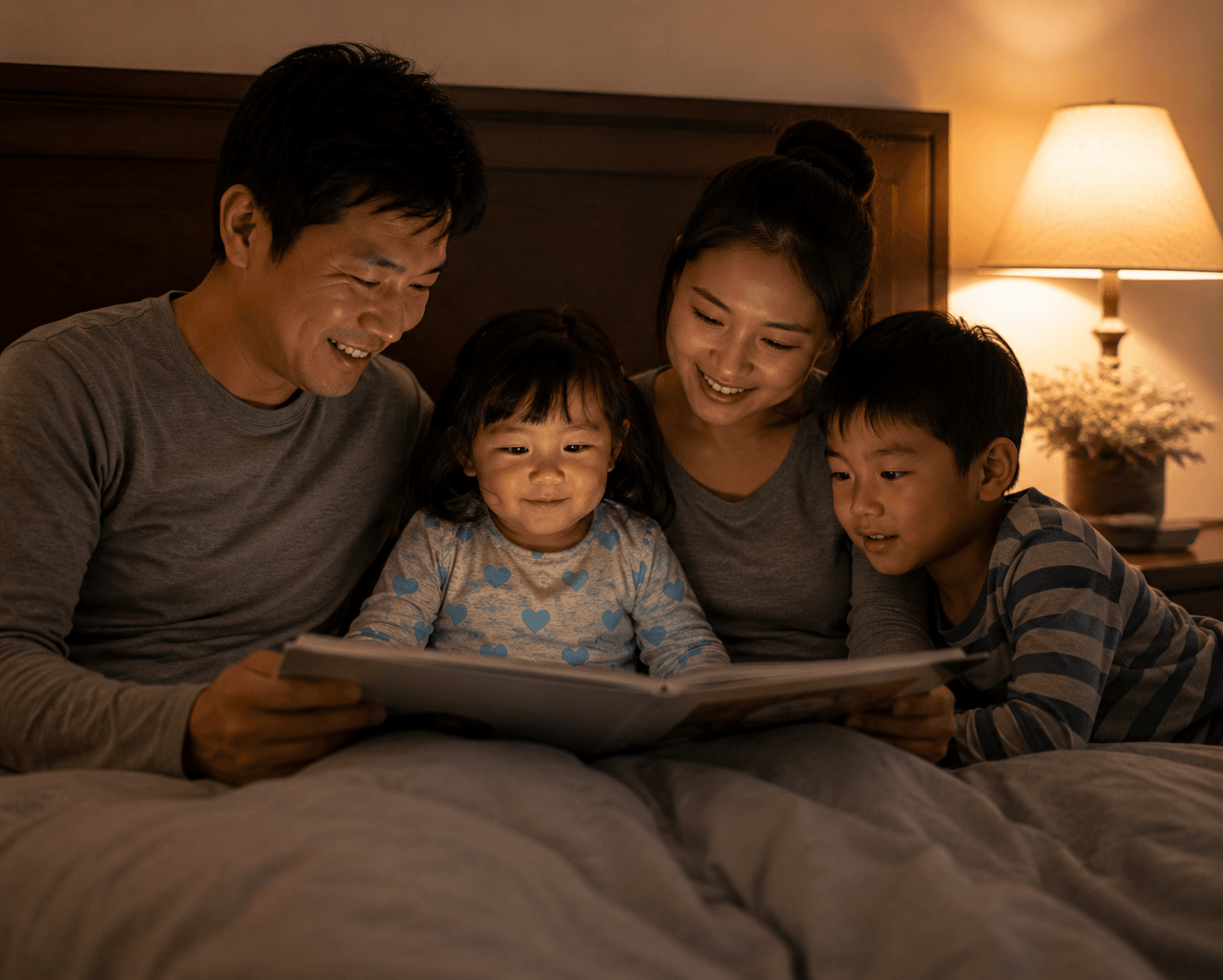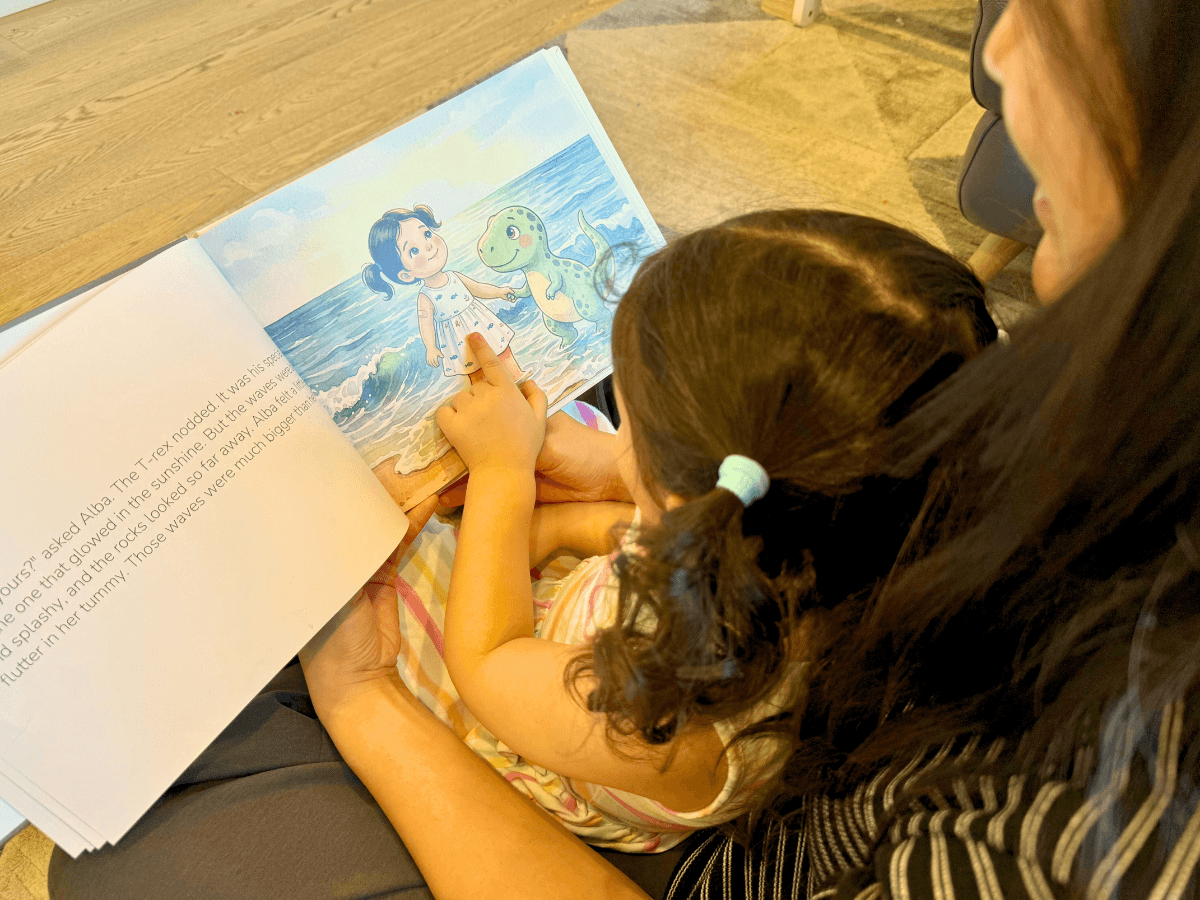
This past Christmas, our daughter (now two) got two books from two different relatives. One was Where the Wild Things Are. The other was a personalised hardcover with her name across the cover. She loved both, in completely different ways. Wild Things she asks for at bedtime; the personalised one is the book she points to and says her own name out loud, the book she sleeps next to, the book she hands to anyone who visits. Both books are doing real work and both books are part of the rotation now.
Once we watched her with both of them, we stopped seeing personalised and generic as a competition. They're different kinds of essential, and a child's shelf works best with both kinds on it.
What each kind of book is actually for
A generic children's book like Wild Things, Guess How Much I Love You, or anything by Mem Fox is a piece of culture. The child meets a character that thousands of other children have met and continue to meet. The story stays the same; the meaning the child takes from it shifts as they grow.
A personalised children's book is a piece of family. The child meets themselves on every page. There's only one copy of it in the world. The story is shaped to who they are this year, and the book gets layered into family memory the way a photograph does. It sits alongside the classics on the shelf and does something only it can do: it tells the child, in their own voice and their own face, that their story is worth telling.1 Many of the families we know find their personalised books in heavier rotation than their classics, especially in the years after the book first arrives.
What personalised books do best
- Make the child the hero of the story. A child opens a book with their own face on every page and the message is unmissable: someone made this for me. That's a feeling no other book delivers, and it's the one parents tell us their child carries from the first read forward.
- Mark the moments worth remembering. Birthdays. The first day of school. The arrival of a sibling. The fixation that's lasted a year. A holiday that meant something. A moment you want the story to help them remember on their own terms. Personalised books speak directly to the child in a way generic books are too polite to.
- Teach a specific lesson the child is working through. A few weeks ago our daughter's daycare educators told us she was struggling to share her favourite toys with the other kids. Ellen made her a book about her favourite stuffed T-rex learning the same lesson, with her illustrated as the kid in the story. She's asked for it most nights since, and we've noticed the sharing is clicking much more. A generic book on sharing would have been too abstract for her age. A personalised book wrapped the lesson in something she already loved, and the lesson came along for the ride.
- Respond to your child's specific imagination. A blue cat and an orange bunny on the same page. A T-rex running at the beach. The exact mash-up of things this kid is fascinated by right now. Almia draws every illustration from scratch around your child's specific requests, so the book reflects what they're into when you order it.
- Become a keepsake that lasts past childhood. A personalised hardcover lasts the way photo albums and hospital bracelets last. Many of the parents we know keep their kid's personalised books on a special shelf, then in a special drawer once the child is older, then pull them out when their kid has kids. The book outlasts the moment it captured.
- Land harder when sent from afar. A personalised book from a grandparent or godparent who lives in another state or country reaches the child differently from a generic one. It's a hand reaching across the distance.
What generic books do best
- The very early years (under 18 months). Self-recognition clicks between 18 and 24 months.2 Before then, the classics, board books, and mirror books carry the weight of early reading.
- Cultural touchstones every child deserves. The Very Hungry Caterpillar. Where the Wild Things Are. Mem Fox's catalogue. These give a child a shared cultural baseline thousands of other kids grow up with. They sit alongside personalised books on the shelf as different kinds of essential.
The case for both, on the same shelf
A child's bookshelf works best with both kinds of books on it. The classics give them a shared cultural baseline that thousands of other kids grow up with. The personalised books give them a story that's about them, marked to who they are at that age, and growing alongside them as new moments arrive: a daycare lesson, a fascination that's lasted, a sibling's arrival, the start of preschool, a holiday they want to remember. Classics keep doing the same thing for years on the same page. Personalised books arrive as new moments do, and each one becomes both a current favourite and a future heirloom at once.
If a friend asks "which should I buy?", the answer is almost always both, on different occasions. A timeless cultural touchstone they'll grow up with: a classic. A book that marks who the child is right now and stays with them as a keepsake: a personalised one.
How to choose a personalised book that lands
Two things separate a great personalised book from a forgettable one.
Anchor it on something specific to the child. A personalised book lands hardest when it's wrapped around something the child already loves: a current obsession, a nickname their family uses, a lesson their daycare is reinforcing, a character they've fallen for. If you're a grandparent, aunt, or godparent gifting and you don't have those details, a two-minute text to the parent before you order ("is he still on dinosaurs, or has he moved on to something else?", "what's the lesson you keep trying to land at the moment?") is the difference between a personalised book that feels generic and one that lands as "how did you know?". Almia's order form has a free-form box specifically for these details, and the more specific you are, the more the finished book reads as a gift only you could have given.
Pick a brand that takes the book itself seriously. This was our blind spot before we made one. We thought personalised books were a slightly tacky novelty until we watched our daughter open one and recognise herself on every page. The reaction is real, and it's specific to brands that treat the book as a real keepsake: paper, binding, illustration craft, story written from scratch. If the book feels like a hardcover that belongs on a shelf for ten years, it becomes the gift the child remembers receiving from you long after the moment.
A note on us
We're Almia. Ellen and I make personalised hardcover books for kids across Australia and New Zealand. We started because we wanted books that felt unmistakably about our daughter, not just close to her.
Among the books Ellen has made for her: an animal-farm book during her animal-farm phase, with the importance of family woven through. A mice-on-the-moon book during her mice-and-space phase, with sharing cheese as the lesson. The current favourite is a book about a secret garden full of bunnies, where the pages have so many bunnies that she counts them out loud as we read, and her counting has come along for the ride. Each one becomes the most-read book on her shelf for the weeks the obsession lasts.
Childhood is full of moments that deserve their own book. The first day of preschool. A new sibling. A toy they've fallen for. A lesson their daycare keeps mentioning. A holiday they want to remember. Each one carries its own story, and the story evolves with the child as new moments arrive.
Frequently asked
Should the first book a child owns be personalised or generic?
How many personalised books does one child need?
Do families buy more than one personalised book per child?
Do personalised books make good gifts for parents who already have a big library?
Can a personalised book replace a classic?
What's the price difference?
Ellen & Diego, Founders of Almia