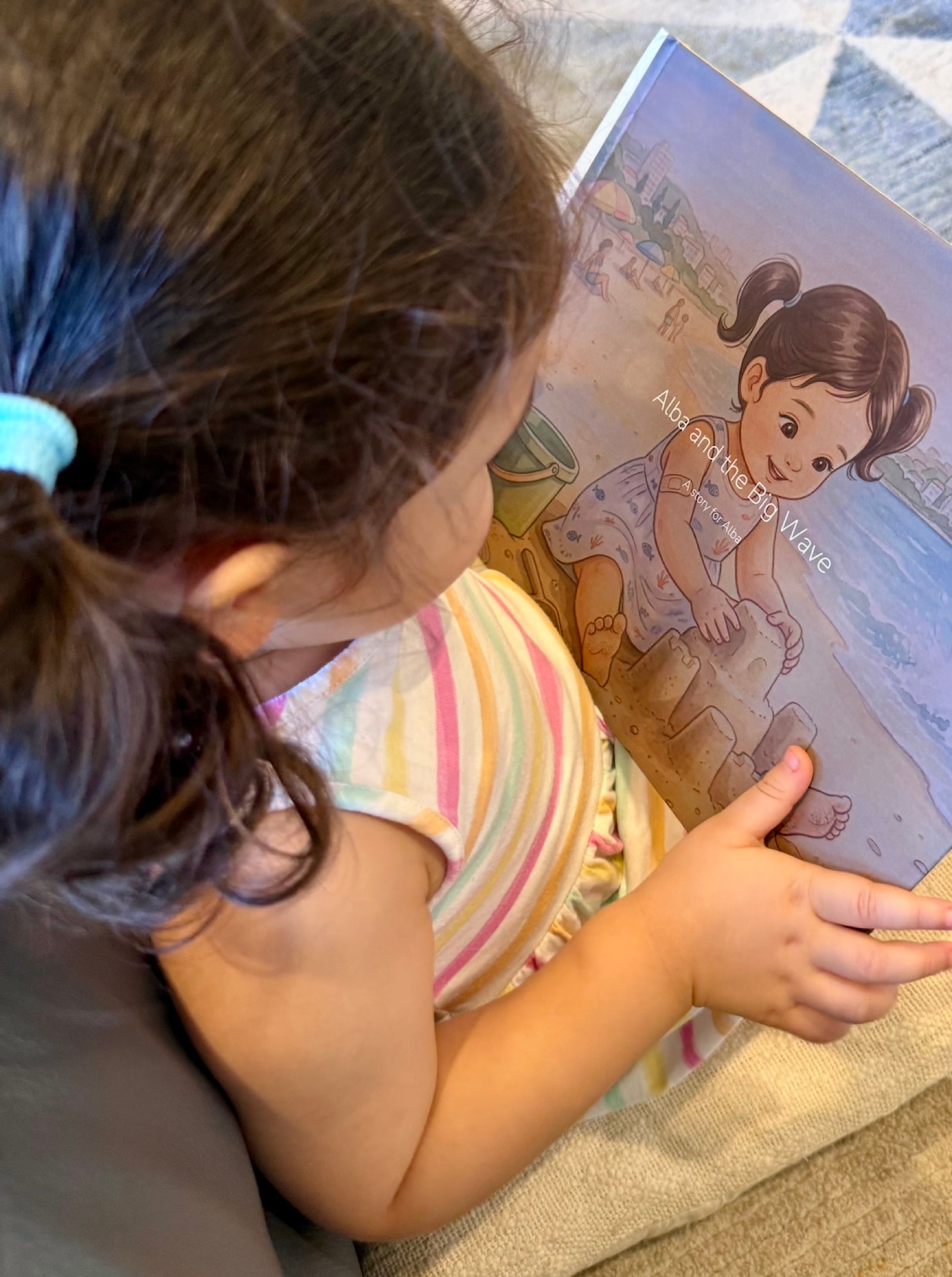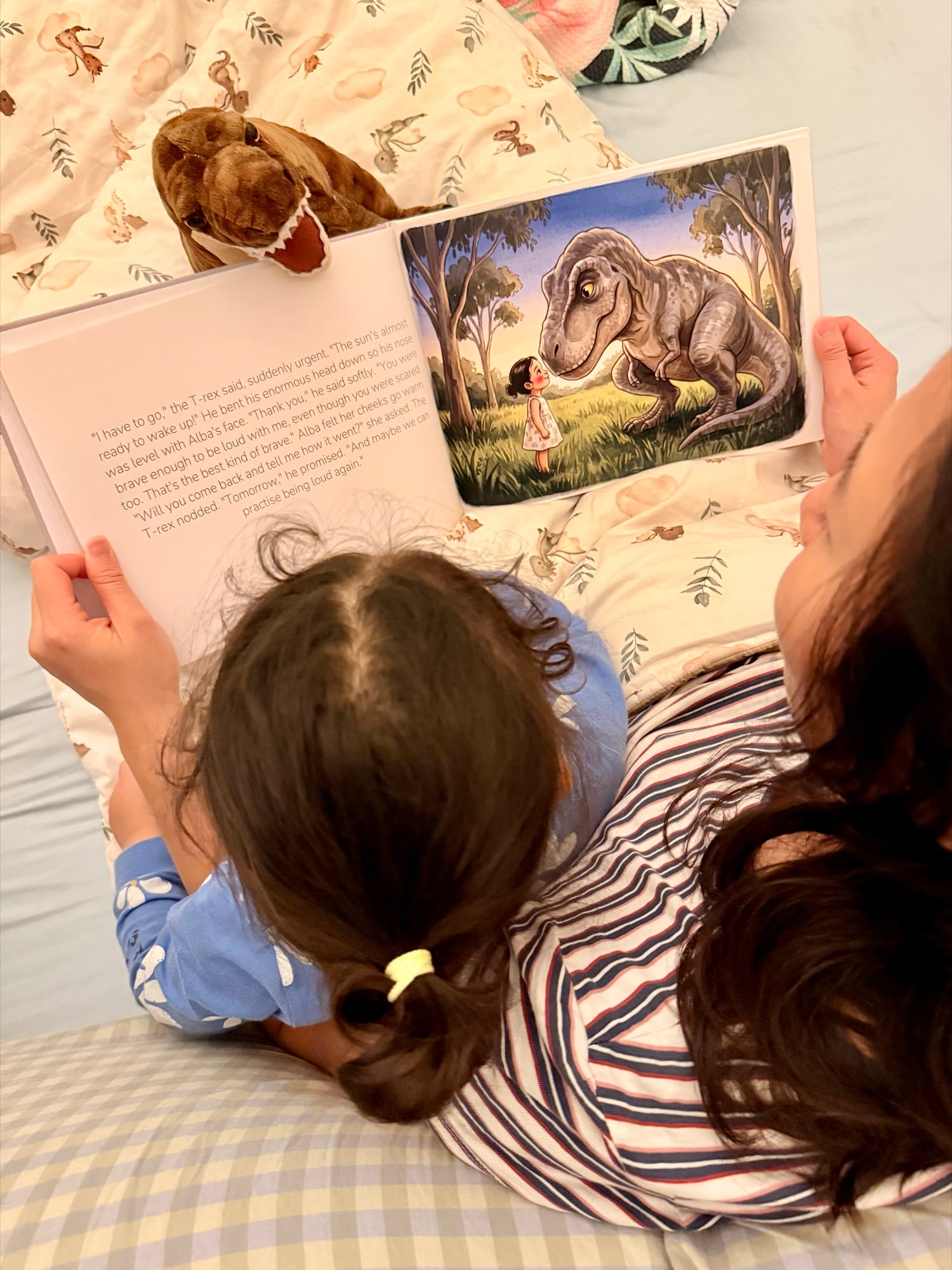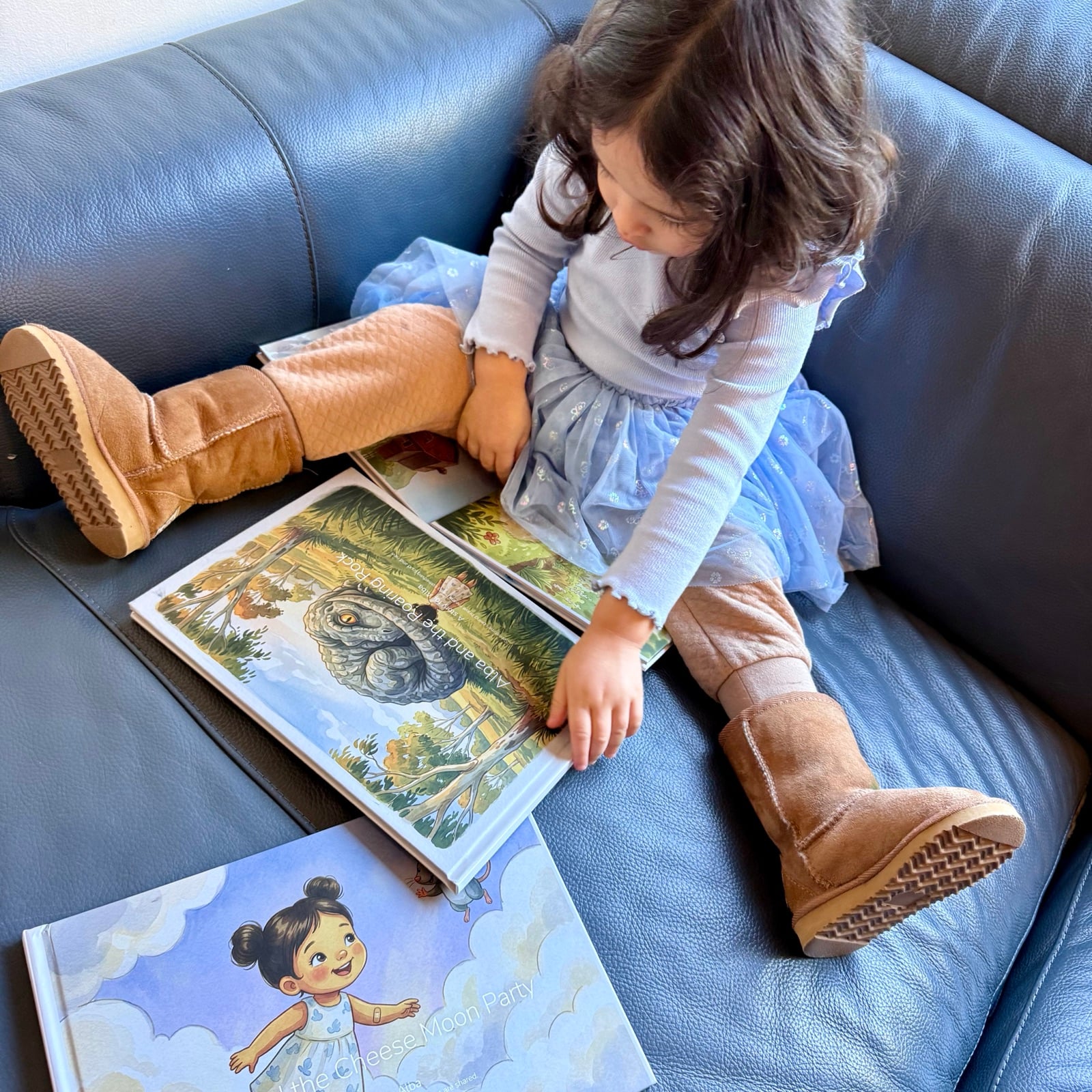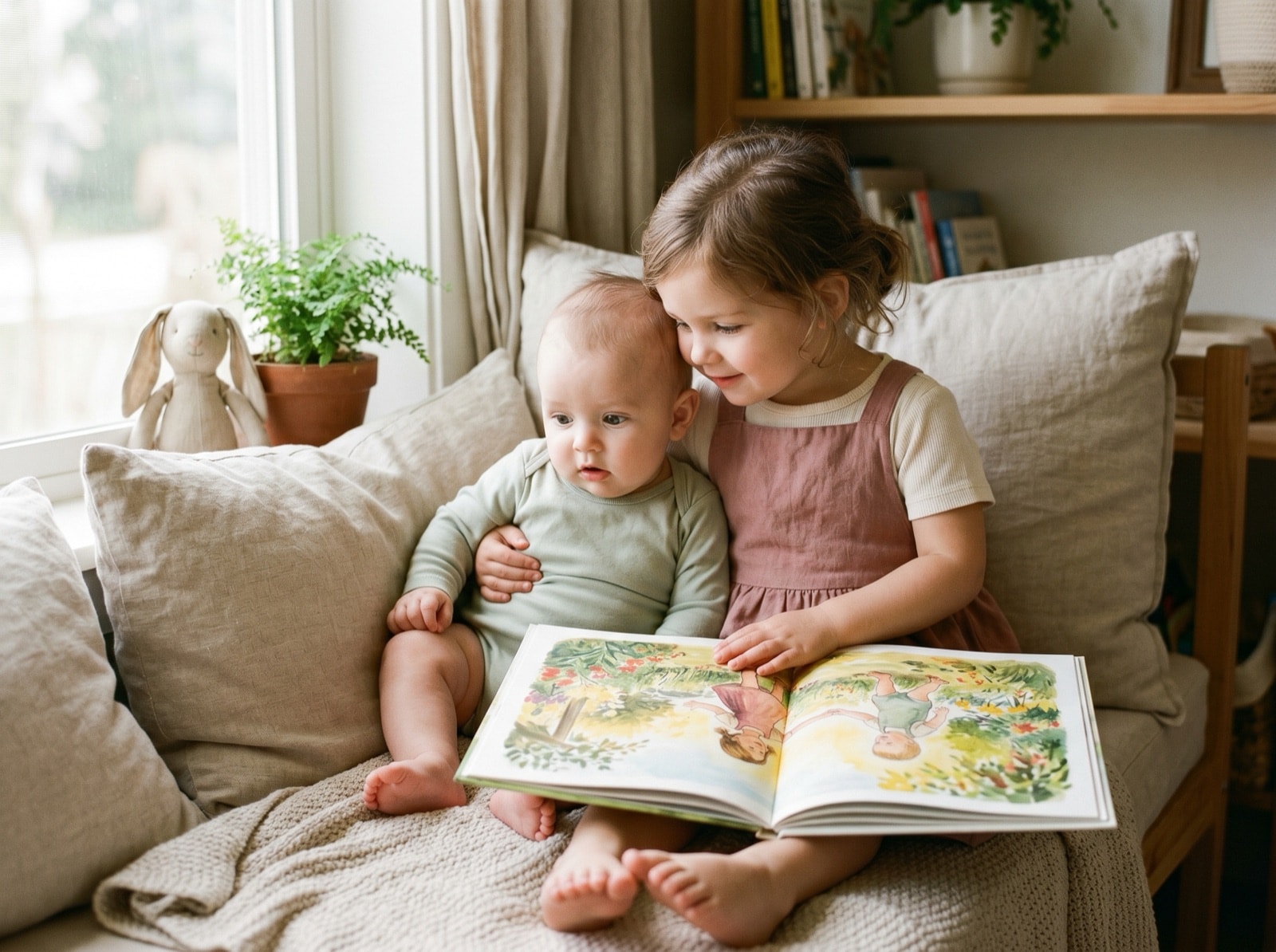
Your toddler knows something is changing. Maybe she pats your belly and says "baby". Maybe she's started asking to be carried again, right when you can least manage it. Maybe she's perfectly fine and you're the one lying awake, wondering how she'll take it when the baby is actually here, in her house, in your arms, crying at 3am.
You can't sit a two-year-old down and reason her through it. The change is too big and the feelings are too new. But you can do something a lecture can't: hand her a story where she is the hero of the new-baby chapter, not the kid being shuffled aside for it. That small reframe, from "the one losing the attention" to "the one with the important job", is most of what helps. This is a guide to using a book to prepare a toddler for a new sibling: what the story has to do, and how to make one that stars your child.
The short answer
The most reliable way to help a toddler with a new baby is to make the change feel like something they're part of, not something happening to them. A story does this well because it lets the child rehearse the new situation while they're calm and curious, in the role of the capable big brother or big sister, before the real thing arrives. A personalised one does it harder, because the child on the page is recognisably them, so "the big sibling who loves the baby" feels like it's about them specifically.
And once the baby has arrived, you can put the actual new baby in the book too. The two children your child is about to spend a whole life beside, on the same page, in a story your child is leading.
Why a story helps when a talk doesn't
Most of us try the direct route first. We explain that a baby is coming, that the baby will be small, that the toddler will be a big sister now. It's worth doing. It also tends to bounce, for the same reasons a sharing lecture bounces (something we wrote about in teaching a toddler a lesson through a book).
Toddlers rehearse change, they don't reason about it. A two-year-old can't hold "the baby will need a lot of attention and that's fair because babies can't do anything for themselves". The chain is too long. What they can hold is a story they've heard forty times where a kid like them meets a new baby, feels a bit unsure, and then finds their place. The story is the rehearsal.2 By the time the baby arrives, the child has already practised the feeling.
The book lands when the child is calm. The hardest new-baby moments happen when the toddler is tired, jealous, or overlooked, which is exactly when nothing new goes in. A book at bedtime delivers the same reassurance when the child is settled and open. The words go in then, and the child has them later, when the 3am cry actually happens.
Repetition does the work. A book read nightly says "you are the big sister and the baby is lucky to have you" twenty, thirty, forty times before the baby is even born. No parent says anything forty times with the same warmth on the fortieth go. The book does, and that consistency is the mechanism. (We made the longer case for re-reading in whether personalised books help with reading; the same engine drives this.)
Seeing themselves as the capable one1 changes the story they tell about it. A toddler who has spent a month as the hero of their own big-sibling book walks into the real thing with a role already in hand. Not the one who lost the spotlight. The one with the important job.
What a new-sibling book has to get right
Not every "new baby" book does these. The ones that actually help tend to get four things right.
Your older child is the hero, not the baby. This is the whole point and it's the one most books miss. The baby is precious, but the baby does not need the reassurance; your toddler does. The story has to belong to the older child. They lead it, they make the choices, the new baby is who they're learning to love. A book that centres the baby leaves your toddler exactly where they were afraid they'd be: off to the side.
The new role is framed as a promotion. Big sister and big brother should land as something to be proud of, not a consolation prize. The child who feels they've been given a job ("you're the one who shows the baby how things work") takes to it far better than the child who feels they've been demoted.
The scene is one they'll recognise. Bringing the baby home. The crying. Sharing your lap. Being asked to be gentle. Toddlers learn from situations they can match to their own week, so a story set in the real mess of a new baby at home lands harder than a vague tale about a faraway stork.
The child earns the ending. Stories where the older sibling chooses to love and help the baby, with a small wobble allowed in the middle, land better than stories where a grown-up tells them to be nice and they obey. We tested this in our own generations, and it's what came through every time: the older child noticing the baby, deciding to include them, ending up proud of it. A toddler identifies with the character. If the character chooses it, the child gets to choose it too.
The four kinds of personalisation, for this specifically
Not all personalised books can do a new-sibling story, because "personalised" covers four quite different things. We laid the full taxonomy out in our guide to the four kinds of personalised children's books; here's what each one can and can't do when the job is welcoming a baby.
| Kind of book | What gets personalised | For a new-sibling story |
|---|---|---|
| Name-only | Your child's name dropped into a fixed story | The plot is the same for every child; the new baby can't really enter it |
| Attribute-based character | A character built from chosen traits like hair or skin tone | The character can resemble your child, but the story is still off the shelf |
| Photo-based character | Your child's face on an otherwise set story | Your child is recognisable, but the sibling theme and the real baby aren't written in |
| Fully-custom | The whole story, the lesson it carries, and who appears in it | Your child is the hero of a story about welcoming the baby, and the real baby can be in it too |
Only the fully-custom kind can write the new baby into the actual plot, because only that kind writes the plot for your family in the first place. It's the difference between a name slot and a story. Almia sits in that fully-custom corner, which is why this use case is one we care about getting right.
Before the baby arrives, and after
Here's the honest seam, because the timing changes what the book can do.
Before the baby is born, you don't have a photo of them yet, and that's completely fine. You steer the story to getting ready: your older child as the hero, preparing for someone new, practising the role. The baby is the one who's coming, described the way your child imagines them. This is the rehearsal book, and it does its work in the weeks before the birth when the anticipation (and the worry) is highest.
After the baby arrives, you have a photo. Now you can add the new baby to the book as a real character, drawn from their photo the same way your older child is, sharing the pages with them. This is the welcome book, the keepsake of the moment your family became one bigger. Same child as the hero, with their actual little brother or sister beside them.
Both are good books to make. They're just different books for different moments, and plenty of families end up wanting one of each.
How we make this at Almia
We're Almia. Ellen and I make personalised hardcover books for kids, and the way we built it maps onto what we've watched work at home.
You tell us two things: who is in the book, and what you want the story to carry. For a new-sibling book, the lesson you type is something like "becoming a big sister and learning to love the new baby". We weave that through the plot itself, into the choices your child makes and how things turn out, rather than tacking a moral onto the last page. Your child is the illustrated hero on every spread. And once the baby has arrived, you add them from a photo as a family member, and they become part of the story, a companion your child shares the adventure with, not just a face in a single picture.
Ellen has been making our daughter, who is two, a rolling series of these over the months, each one anchored on whatever she's into at the time. One, during her animal-farm phase, had the importance of family woven all the way through it. We've watched how naturally a book carries the idea of family when the child is the one living it on the page, which is most of why we think this format fits a new-sibling moment so well.
A note on what to write in the lesson box, because parents often overthink it. A single sentence is plenty, and the more it sounds like the feeling you want your child to walk away with, the better the story carries it. "Becoming a big brother and making room in his heart for the new baby" gives the story everything it needs to aim at.
Frequently asked
What's the best way to prepare a toddler for a new baby?
Do books actually help with new-sibling jealousy?
What age does a new-sibling book work from?
Can I put the new baby in the book too?
Should I get the book before or after the baby arrives?
What should the story actually say?
Is a new-sibling book just for the older child, or the baby too?
Ellen & Diego, Founders of Almia