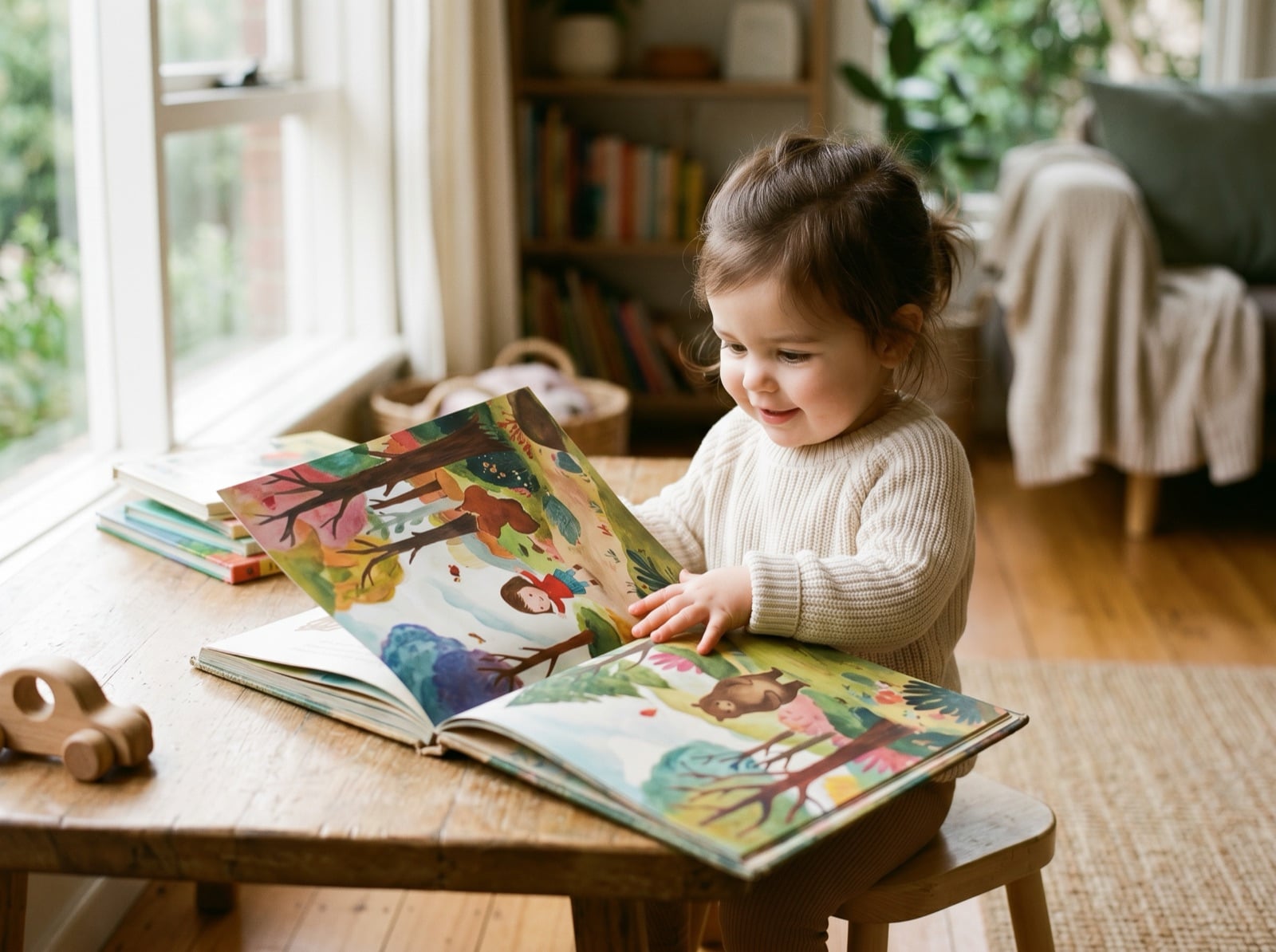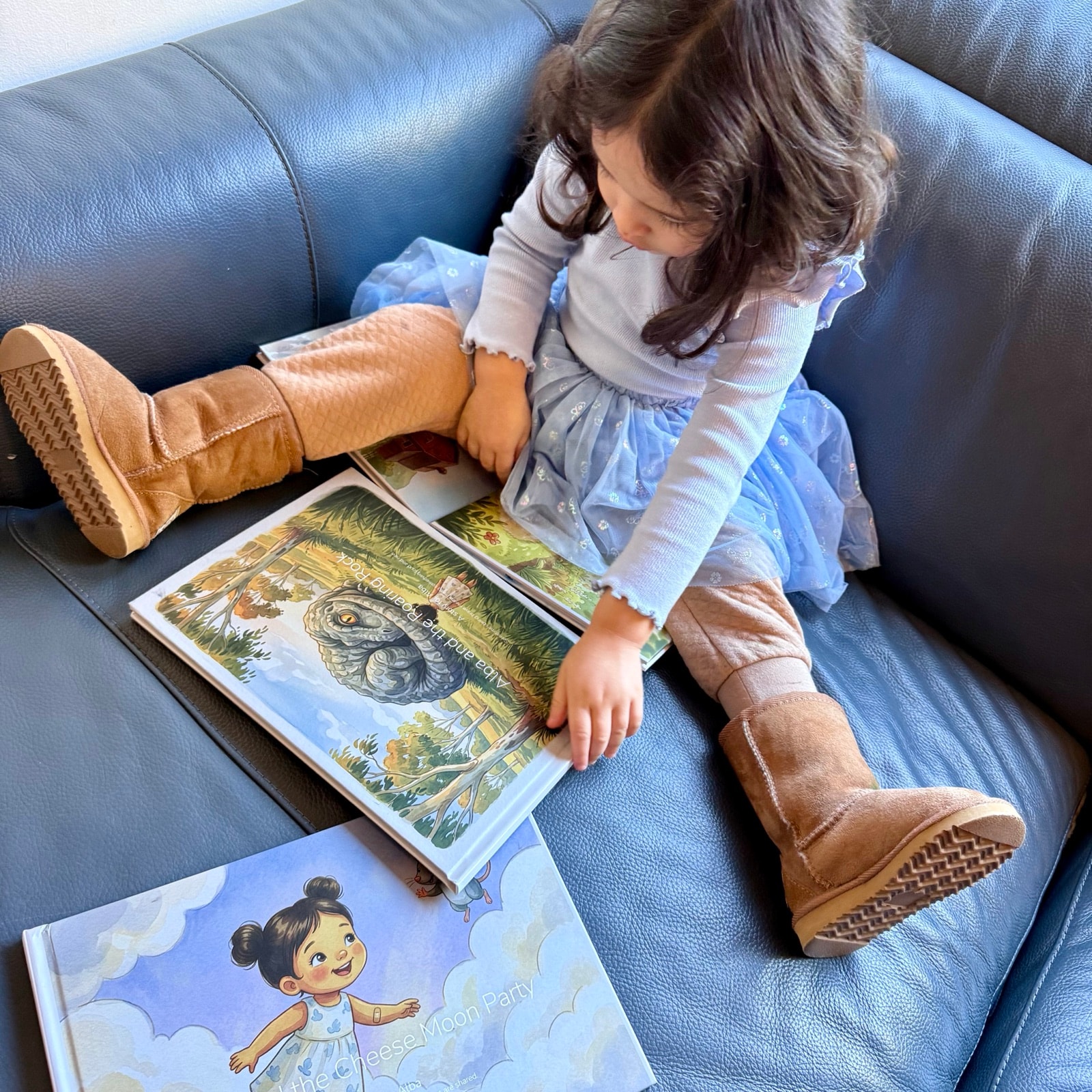
By two, our daughter knew it was her on the page. She would point at the character, then point at her own face, then say her own name. The kid in the book had her hair, her cheeks, her grin. Not a kid who looked a bit like her. Her.
That recognition is the whole point of a photo-personalised book, and it is the thing parents are least sure about before they order. A name on a cover is easy to picture. A character drawn from your child's actual photo, the same child on every page, is harder to imagine until you see it. This piece is about how that works: what "personalised with my child's photo" really means, how a photo becomes the character, and how to tell a book that genuinely looks like your child from one that just prints their name.
We're Almia. Ellen and I make photo-personalised books for kids, so we are one of the options this covers. Here is the honest version of how the photo part works.
What "personalised with a photo" actually means
The word "personalised" hides a lot. Three kinds are worth separating before you spend anything. (We break the full set down in our guide to the four kinds of personalised books.)
Name-only. Your child's name is dropped into a fixed story with a fixed cast. The character is whoever the brand drew once. Lovely to receive, but the kid on the page is not your kid.
Attribute-based. You pick a few traits: hair colour, skin tone, glasses. The character gets closer in the way a build-your-own avatar does. Closer, but still a template wearing your child's features.
Photo-based. You upload a photo, and the character is illustrated to look like the specific child in it. Same face, same hair, the same kid on every spread. This is the one that earns the "that's me" moment, because the child on the page is recognisably them.
So how does a photo become a character? You share a clear photo of your child's face. From that, the book is illustrated so the character carries their likeness: the shape of their face, their hair, their colouring, the things that make them look like them and not like a sibling. Then that same character is drawn into every page of the story, not just the cover. Consistency across pages is the hard part and the important part. A child clocks it instantly when the kid on page three stops looking like the kid on page one.
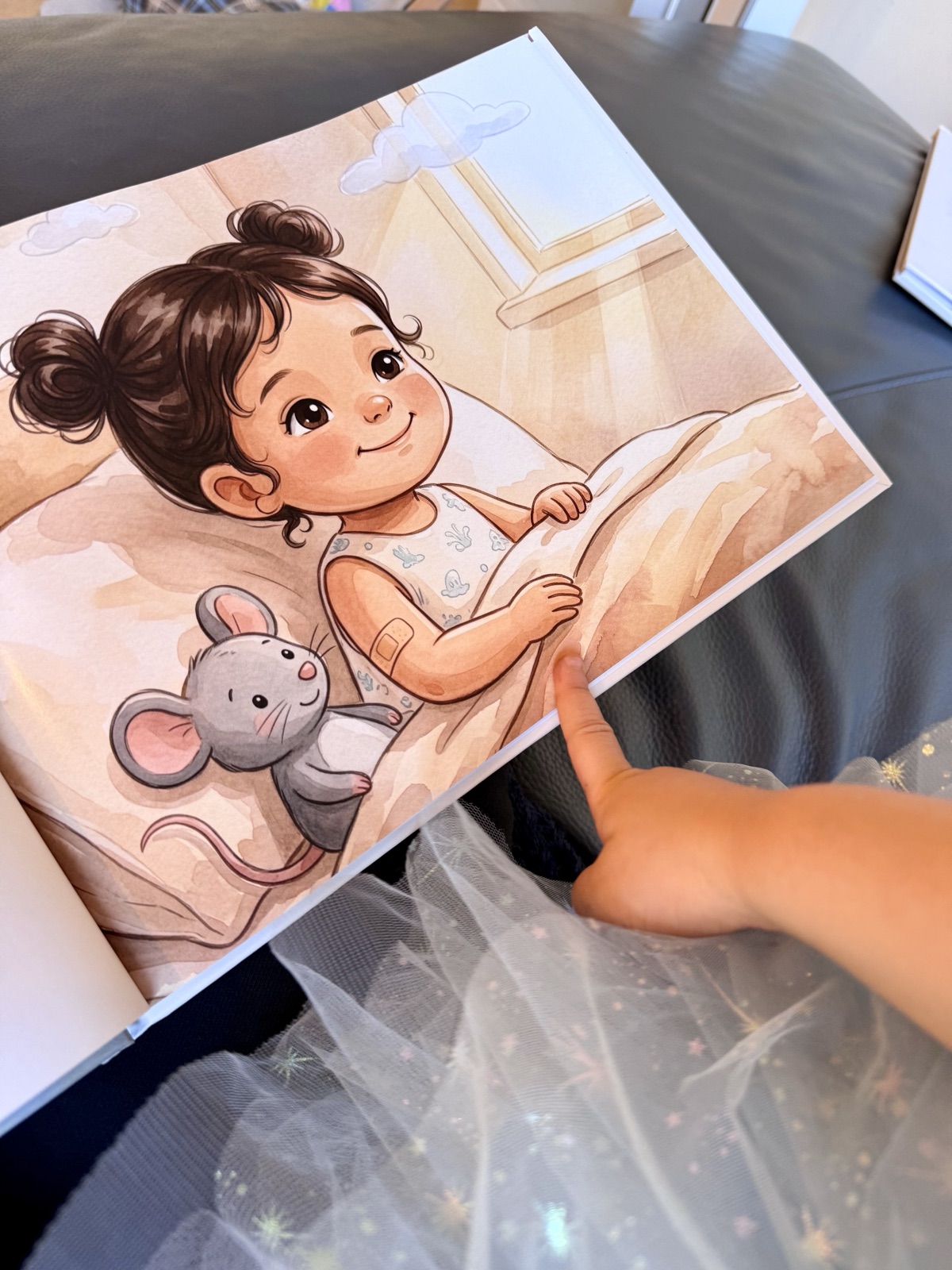
Here is one of those pages up close, the character drawn to look like the child the book was made for.
Most kids start recognising themselves in pictures around 18 to 24 months. From there a photo-personalised book lands as a real read, and by two it is reliable.1 (More on what age each kind lands.)
Where Almia fits in
Almia sits at the photo-based end, and then goes one step further. The character is drawn from your child's photo onto every page, and the story itself is written from scratch around them: their nicknames, what they are obsessed with this month, a lesson you want the book to carry. The photo makes your child the hero on the page; the custom story makes the book about them, not about a kid who happens to share their face. (Here is how we think about teaching a lesson through a book.)
We have watched this run at home. Our daughter is two. Her current favourite is a book about a secret garden full of bunnies, made while she was deep in a bunny phase. The pages are full of bunnies and she counts them out loud, one by one, most nights, and her counting has come along for the ride. The photo is why she recognises herself on the page. The custom story is why she keeps coming back to it.
How to spot a real photo-personalised book
A few things separate a book that genuinely looks like your child from one that prints their name and calls it personalised.
- The character is on every page, not just the cover. Flip past the front. If the inside pages show a generic child, the personalisation stopped at the cover.
- It looks like your child, not a child with their hair colour. Attribute sliders give you the right hair and the wrong kid. A photo-based book should make you go "that's them", not "that's close".
- They stay the same kid across the whole book. Same face on page two and page twenty. Consistency is the tell of a book that was actually drawn around your child.
- You can see it before you pay. A photo you upload is a real thing you can check against a real preview. If you cannot see the finished pages first, you are buying on trust.
Why we built Almia photo-based
We built Almia around photo-based illustration because we wanted the book to feel unmistakably about the kid in the photo, not close to them. Every Almia book is:
- Hardcover, 26 pages, on 170gsm silk paper with a matte-laminated cover
- Photo-personalised on every page, with the character drawn from the photo you upload
- A story written from scratch around your child, their interests, and any lesson you want it to carry
- Previewable end to end before you pay, so you only buy if it looks like your child
- Currently delivering to Australia and New Zealand, with global delivery on the way
Frequently asked
How does a personalised book with my child's photo work?
Will the book actually look like my child?
What photo do I need to upload?
What age is a photo-personalised book best for?
Is the whole book personalised, or just the cover?
Ellen & Diego, Founders of Almia