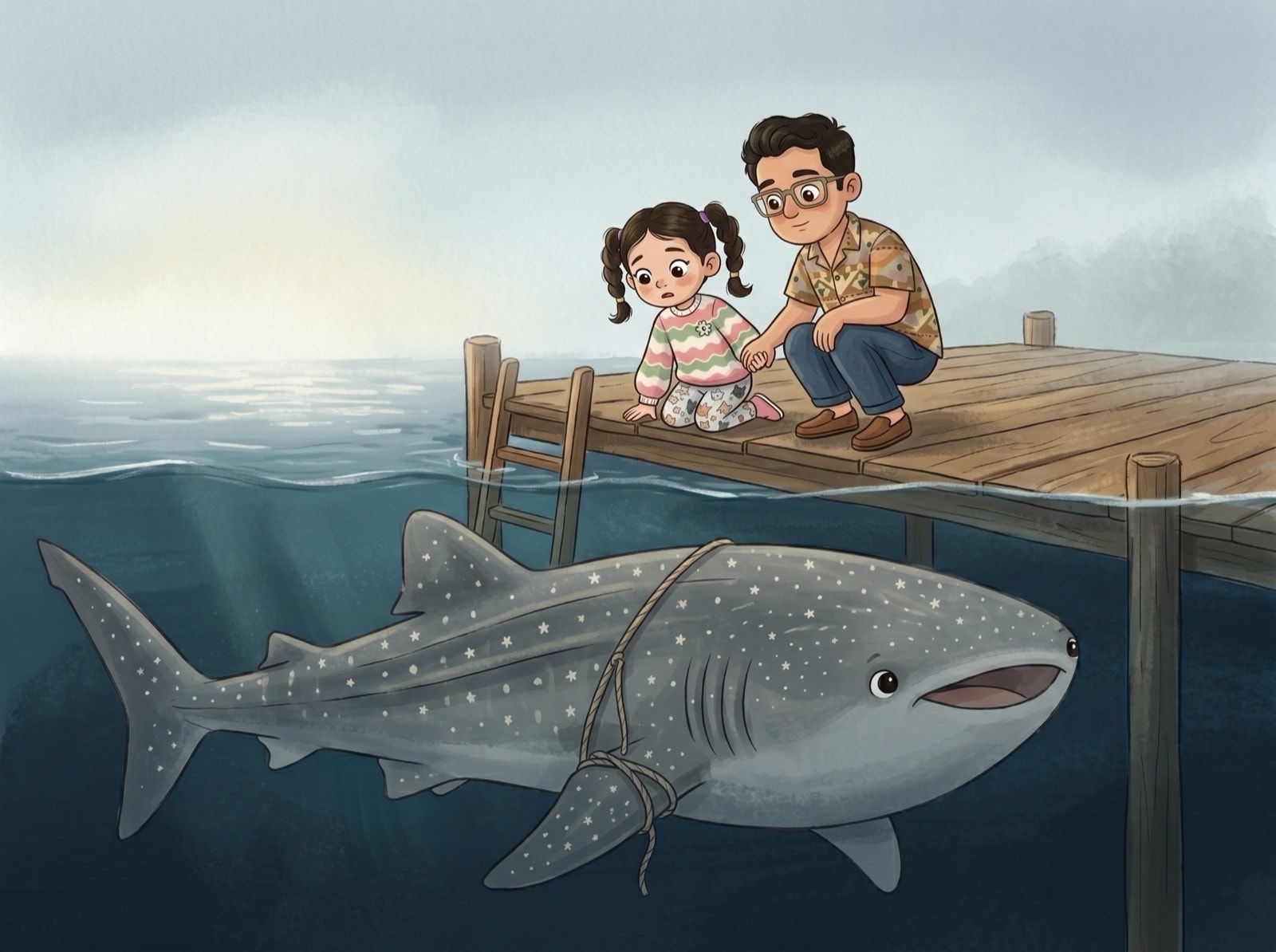
A while back, our daughter came home from daycare talking about whale sharks. Just whale sharks, for days. So Ellen made her a book about one: a big, gentle whale shark caught in a tangle of ocean rubbish, and our daughter is the one who frees it. She opened the book, and there she was on the page, leaning out over the water to work the net off its fin. Not a child watching the sea. The one who does the thing.
Yes. A fully-custom book makes your child the main character in two ways at once: the hero is illustrated to look like your specific child on every page, and the story is written from scratch so they drive it. A name-only book only puts their name on a stranger's hero. You read the whole book, with them already in it, free before you pay.
She asked for that book every night for a fortnight. She was not being told to care about the sea; she was the one saving it, page after page. That is the moment this post is about. There is a real difference between a book your child appears in and a book your child is the main character of, and it is worth understanding before you spend anything.
We're Almia. Ellen and I make these books, so fully-custom is the kind we know best, and it is the kind this post argues for. What "main character" actually means, and how to tell a real one from a name-swap before you pay.
What does "main character" actually mean?
It means two layers, and most books only do one of them.
A fully-custom book is the only kind where the personalisation reaches the story itself. So the child both looks like the hero and is the hero who acts. Pull those two layers apart and you can see what you are really buying.
Layer one is recognition. They look at the page and they know it is them. Not a child with their hair colour. Them. Children start recognising themselves in pictures, and pointing at them as "me" or by their own name, somewhere between 18 and 24 months. 1 Once that clicks, seeing yourself as the hero is a genuine event. This is the appearance layer, and it is the part most people picture first. We wrote a whole separate piece on how a photo becomes the character on every page, so we will not re-explain the mechanics here. The short version: a real photo-personalised book keeps the same recognisable child across the whole book, not just the cover.
Layer two is the one almost nobody talks about. Story role. Is your child the one who makes the choices and solves the problem, or are they just present while a generic plot happens around them? That is the protagonist question, and it is where the four kinds of personalisation split hard.
| Kind of personalisation | Looks like them? | Story is built around them? |
|---|---|---|
| Name-only (their name dropped into a fixed story) | No | No |
| Attribute-based (pick hair, skin, a few traits) | Roughly | No |
| Photo-based (illustrated from a photo) | Yes | Surface only |
| Fully-custom (photo plus story written for them) | Yes | Yes |
Only the bottom row wins both columns. If you want the full breakdown of how these four compare on price, time, and fit, we laid it out in the four kinds of personalised books. For this post, the table is the point: "main character" needs both ticks, and only one kind gives you both.
What's the difference between my child appearing in a book and being the main character?
The difference is agency. In a name-only or template book your child appears, but a generic plot happens around them; in a fully-custom book the story is written so your child makes the choices and resolves the problem. One is a passenger. One is the protagonist. Here is the distinction nobody sells you, because it is harder to manufacture.
Picture a book about "a child who helps a friend". You drop your child's face and name into it. Your child is now in the book. Lovely. But they are not leading it. The story was written for nobody in particular, and your child is a passenger in someone else's plot. The lesson, the choices, the turning point, none of it was built for them.
Now picture the cloud book. Our daughter was learning to do a roly poly at the time, working at it daily. So Ellen wrote a story where she is the one who teaches a small lost cloud, a little fellow named Somersault, how to tumble, one roly poly at a time, until it can somersault all the way home to the city in the clouds. She was not being read a story about somersaults. She was the one showing the cloud how. The choices, the rescue, the whole turning point, hers. A two-year-old takes that personally in the best way. That is the difference between appearing and driving. It is not a small upgrade. It is a different category of thing.
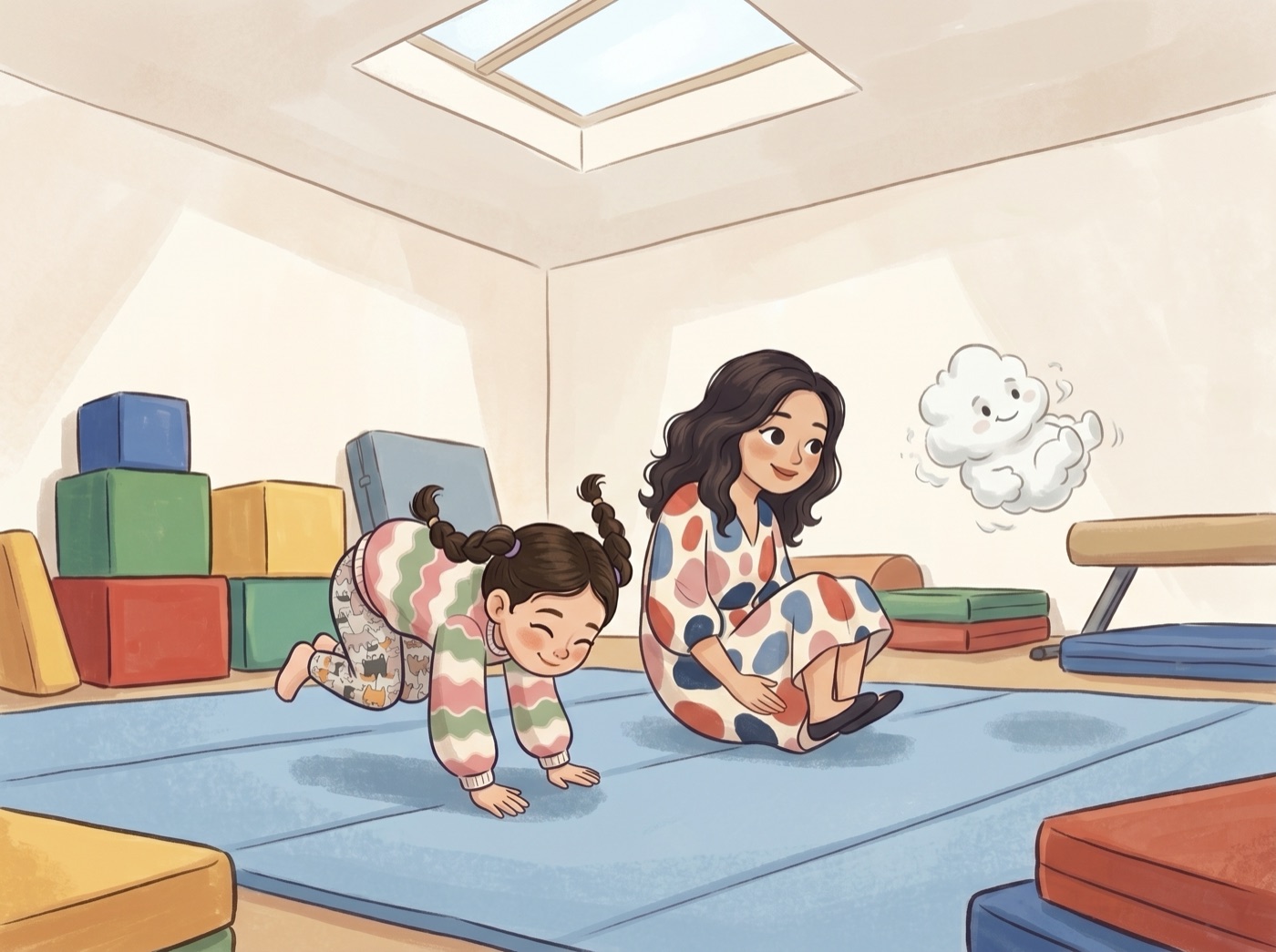
So here is our opinion, and it is one the name-only end of the market will not put on a page: name-only personalisation puts your child's name on someone else's hero. Fully-custom makes your child the hero. That is the whole argument. When the story itself is built around them, a lesson has somewhere to land, because the child chooses rather than being told. We dug into that mechanism in building the lesson into the story, and it is the single biggest reason we build the way we do.
There is good evidence the engagement is real, not just our parental bias. Researchers who study shared reading have found that parents and children show more smiles, more laughter, and more talking when they read a personalised book together than when they read a comparable non-personalised one. 2 The personal information in the book is what does it. A child who recognises themselves leans in.
Is it genuinely them, or a template with their name?
This is the question that decides the purchase, so let us answer it straight.
The way to know is to read the whole book first, with them already in it, and only pay if it looks like them and the story is theirs. Almia shows you the entire 26-page hardcover with your child in it, free, before you pay anything from A$59.95 plus delivery. You should never be spending on a maybe.
There are two trust signals to check, and you can check both before you pay. The first is consistency (we cover how to spot that in the photo post); the second, and the one this post is really about, is whether the story actually bends to your child. Their nickname. Their current obsession, whale sharks or clouds or whatever has taken over this month. The specific lesson you want it to carry. If the plot would read identically for any other child with the name swapped, it is a template. If it would not, it is theirs.
This is also why a free full-book preview matters more than any promise we could make in copy. With Almia you see the entire book, your child in it, the whole story, before you pay anything. You are never spending on a maybe. You read it, and if it does not look like them and feel like theirs, you walk away having spent nothing.
For the record, here is what the book is, in plain specifics: hardcover, 26 pages, 170gsm silk paper, matte-laminated cover, from A$59.95 plus delivery. Dispatch in 5 to 7 business days, tracked. We currently deliver to Australia and New Zealand, with global delivery on the way. If you are weighing up what age this starts to land or comparing a personalised book versus a generic storybook, those two posts go deeper than we can here.
What's the best occasion for a make-your-child-the-main-character book?
The strongest occasions are a fascination they have brought home, a skill they are working on, a birthday or first milestone, and a new baby on the way; any of the four gives the story a real reason to centre your child. You do not need a special reason, but these moments make an especially good one, and they are worth naming.
A fascination they bring home
When something genuinely takes over (for us it was whale sharks, brought home from daycare and talked about for weeks), a book that makes your child the hero of exactly that world hits differently. It catches the obsession while it is alive, and a value can ride along with it: ours carried a quiet one about caring for the sea and the animals in it. That book was the most-read on her shelf for the whole stretch of the phase.
A skill they are working on
The fortnight our daughter was set on mastering her roly poly, the cloud book met her exactly there, and she got to be the one teaching it. A real-world thing they are practising, woven into a story where they are the expert, lands in a way that nagging never finds.
A birthday, or a first big milestone
A keepsake that marks the actual moment, with the actual child at the centre. The only copy of that story in the world.
A new baby on the way
This might be the strongest "hero of their own story" occasion of all, because it reframes the older child as the one with the important job, not the one being replaced. We wrote about it in the new-sibling post.
We do not believe in a fixed number of these. Each book belongs to a moment, and childhood is full of moments worth marking. The obsessions pass; the books outlast them. And lately something has shifted: our daughter has started coming to us and asking for a new one, a world she has in her head that she wants made real. That is the whole reason we build this way. It is her world, the one only she fully understands, and on the page she is the one who gets to live inside it.
Life is rich. Their bookshelf should be too, full of the memories only they can tell, the ones you help them bring to life.
Frequently asked
Can you really make my child the main character of a book that looks like them?
What's the difference between a book with my child's name and one where they're actually the main character?
Will the main character look like my child on every page, or just the cover?
Can the story be built around my child's nickname, their current obsession, and a lesson I want it to teach?
How can I tell a genuinely custom book from a name-swap before I pay?
Ellen & Diego, Founders of Almia