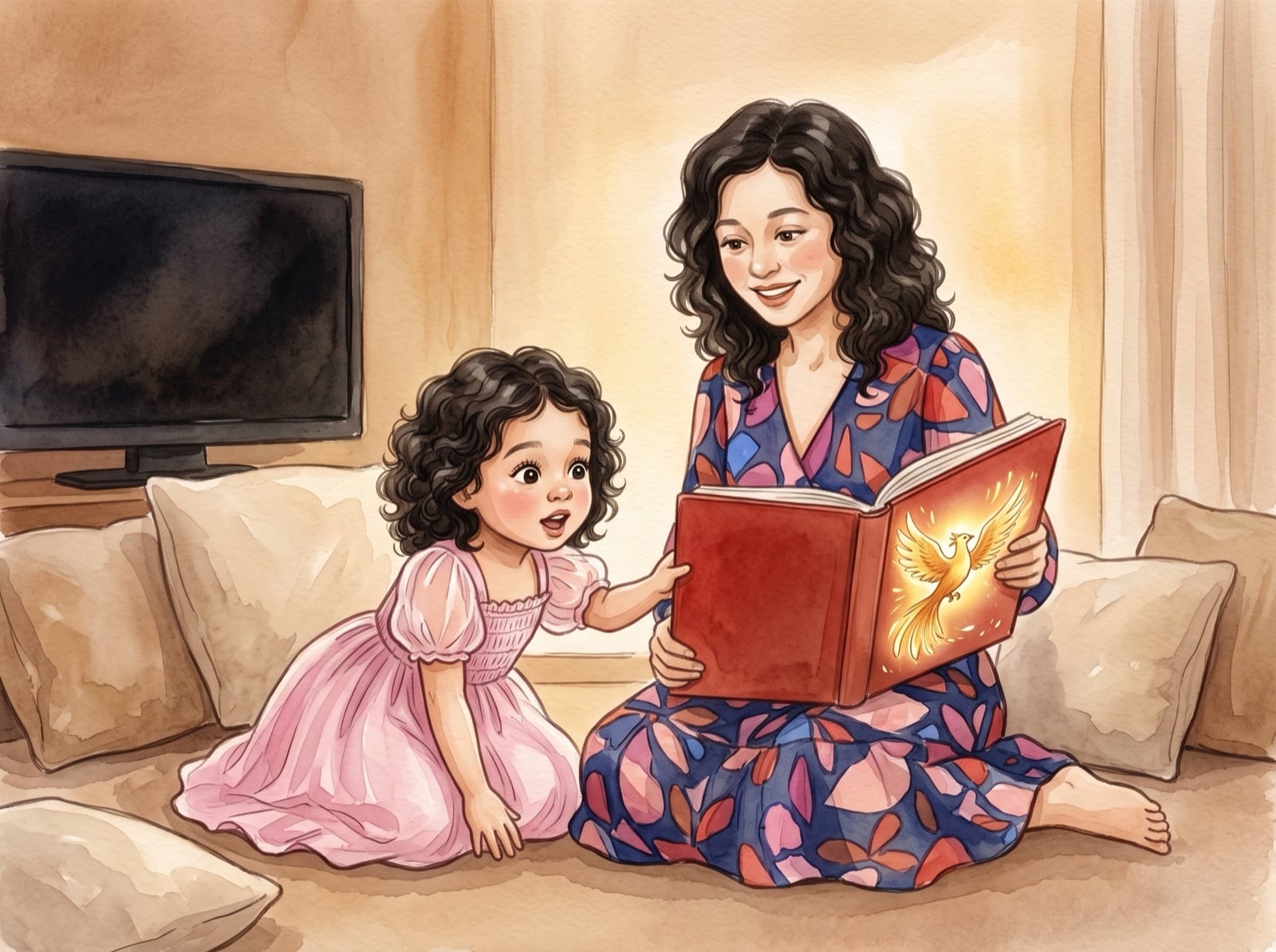
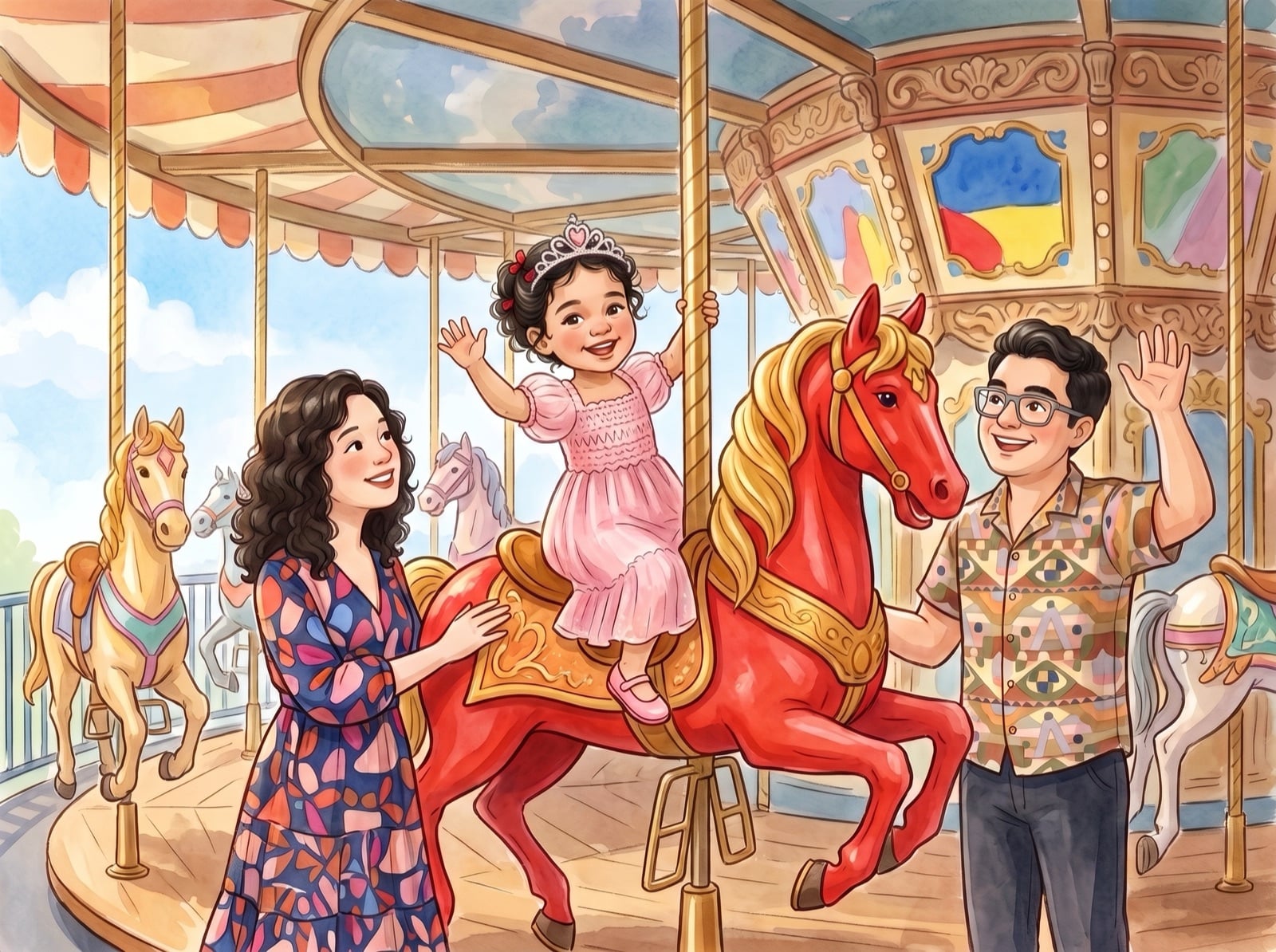
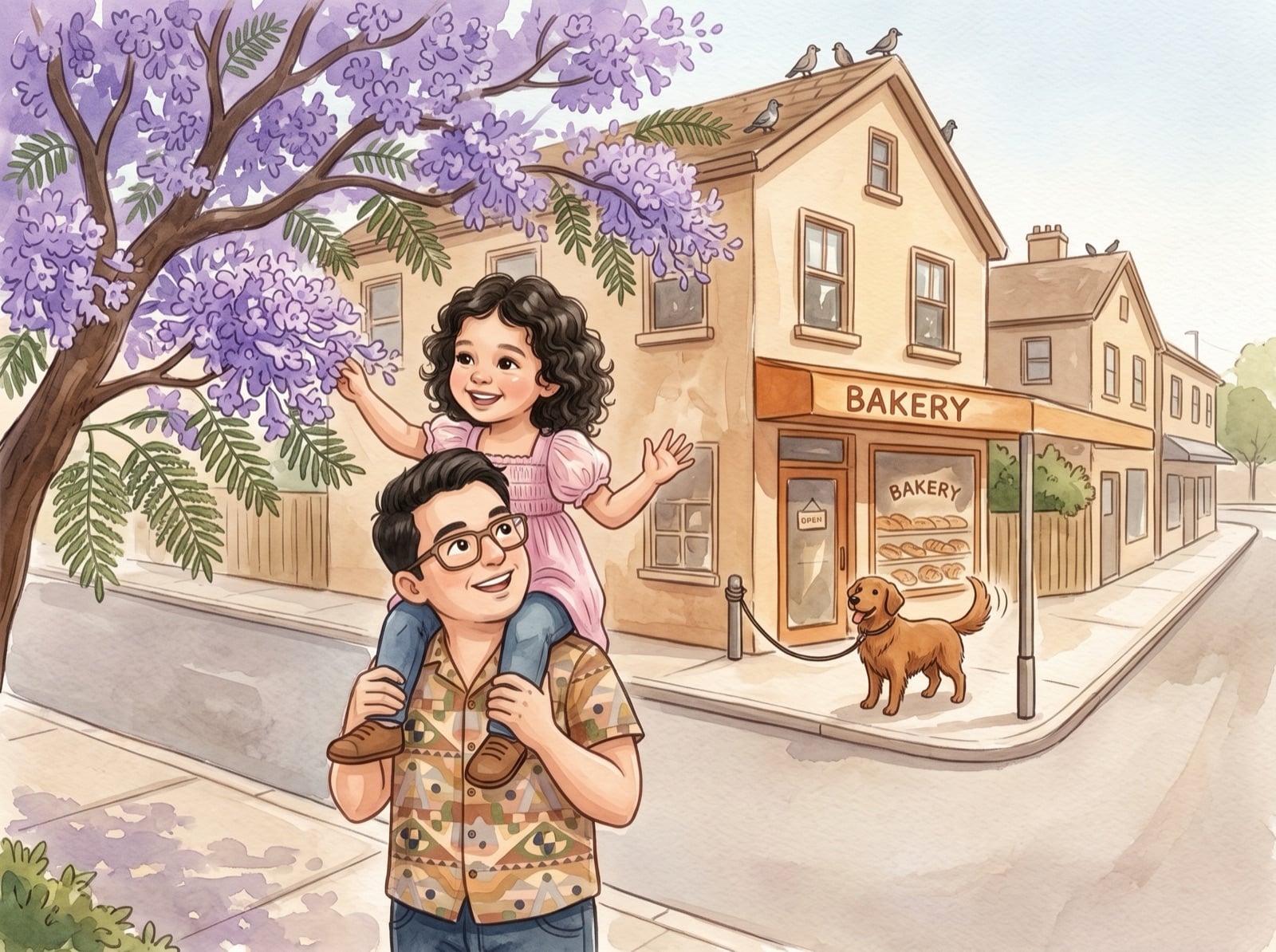
These days, our daughter does not ask for Ms Rachel. She asks to make a book. Not to have one read to her, but to make one, with Papa and Mama, about whatever has taken her over that week. Last time it was an octopus, because she had been thinking about octopuses for days. Somewhere along the way she became the writer and editor in chief, and we became the publishers and the narrators. The stories are hers now, and she has firm opinions about what comes next.
So we get asked a fair bit, usually by a parent standing at the edge of their first order: how many of these does one child actually need? Is one enough? Is there a point where it stops being special? It is a fair question, and we have a real answer, because we have been living it.
How many personalised books does one child need?
There is no fixed number, and there is no ceiling. A personalised book marks a moment, not a quota, and a childhood is full of moments worth marking. The right number is set by the child's life, not by a rule: one book if there is one moment you want to hold, and more as more moments arrive.
Here is the honest version, from our own house. Across just a few months, between the two of us, we have made our daughter books about a T-rex, a bowl of udon noodles, a tiny safari animal called a bush baby, a clever octopus, a giraffe, a chocolate ice block, and more. That is us empowering our daughter's imagination like nothing else has. That is one ordinary stretch of one two-year-old's attention, written down. Each book caught the thing she was lit up about that week, while she was still lit up about it.
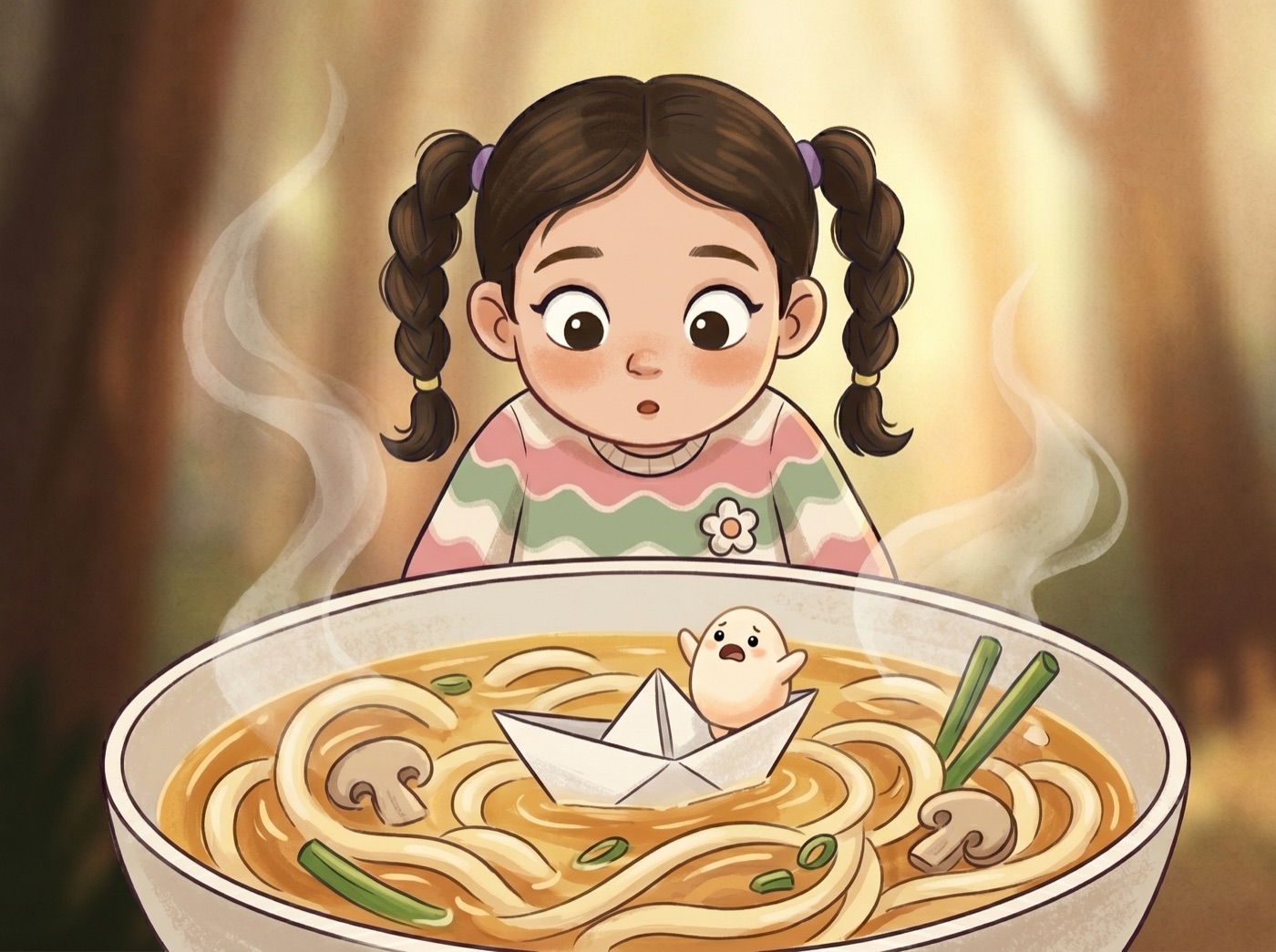
The udon one shows why the count is the wrong thing to fixate on. It is not just a book about a child who likes noodles. We built it to carry a small idea about family heritage, about loving the food you grow up with, with her as the hero of it. You do not get that from a book off a shelf, and you do not get a second go at the week she was wild about udon noodles. That is the whole case for more than one, in a sentence: each book belongs to a different moment, and the moments do not wait.
Do children get bored of personalised books?
Every child is different, but in our experience the answer is no. Each book is tied to something the child genuinely cared about at the time, so it keeps meaning something after the obsession passes. What we see, in our own house, is not boredom; it is rotation. A new book becomes the most-read on her shelf for as long as that fascination lasts. Then a new fascination arrives, a new book joins, and the old one does not get thrown over. It cycles back. She still pulls out the giraffe book weeks after giraffes stopped being the main event.
This is the part that surprised us. The obsessions are what fade. The books outlast them. By the time the octopus phase ends, the octopus book is not really about octopuses any more; it is about the week she could not stop thinking about them, with her in it, and that does not expire.
On her shelf, the classics get read. The personalised ones get read, kept, and asked for by name, long after the obsession that prompted them has passed. That is not the behaviour of a novelty.
There is something we did not expect, either: the making itself became a ritual. She comes to us now and asks to start a new one, and the three of us sit down and build it together, her calling the shots about what happens next. The finished book is the keepsake. The afternoon we spend making it, as a family, turns out to be part of the gift too.
What a few months actually looked like
Here is the real run, laid out plainly. The stories are described rather than titled, because every one of them has her real name on the cover and we keep that off the internet.
| What had taken over that week | The book it became | What happened on the shelf |
|---|---|---|
| Udon noodles | A quest across a bridge of noodles, carrying a small idea about family heritage and loving the food you grow up with | Most-read while noodles ruled the week; she still loves them and keeps coming back |
| A bush baby called a galago | An evening safari about protecting animals, where she is the one who keeps a tiny galago safe | Still comes back into rotation, safari phase or not |
| An octopus in a rockpool | A rockpool mystery about nature's intelligence, where the octopus turns out cleverer than anyone expected | Outlasted the obsession that prompted it |
| A giraffe as tall as the trees | A garden where every giraffe is a counting surprise | Pulled out again well after the giraffe phase, now a fun maths activity |
| Chocolate ice blocks | A hunt for a chocolate tree, where the treat is the reward at the end | Back in her hands weeks later |
| Dinosaurs, again | A brave little story about guarding a mysterious egg | On top again, because the obsessions loop |
Six books, six completely different worlds, one child, a few short months. Notice the last row. Dinosaurs came back. They always do. That is the argument against a ceiling in a single line: a child does not have one interest that holds still, they have a moving parade of them, and the joy of these books is that they can keep pace.
But look across the run and you also start to see what does not change. The same small companion turns up in book after book: her dog, her best friend, coming along on every adventure, whatever the obsession of the week happens to be. In the giraffe one, the two of them set off together to follow a path made of the tallest trees in the world, all the way up into a kingdom of giraffes. The giraffes were that week's fascination. Her dog was the constant, the one who is always there beside her.
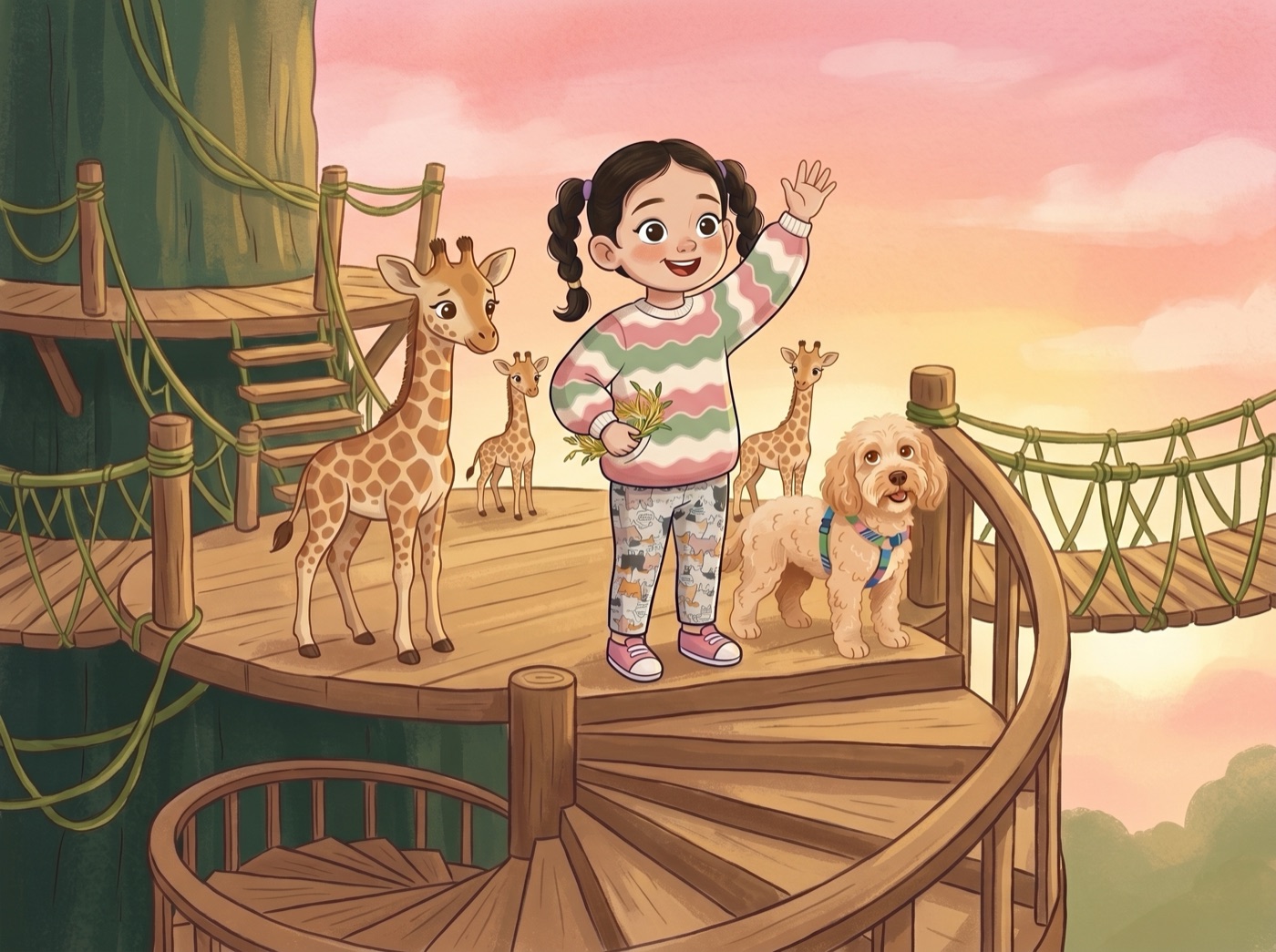
That is the part you cannot buy off a shelf: not just your child on the page, but their whole world. Her dog. Her adventures. The cast she carries with her from one book to the next. The obsessions come and go; the world they all belong to is hers, and it grows a little with every book.
So is one book enough?
One book is absolutely enough to start, and for plenty of families it is the whole story. But "enough" is the wrong measure here, because each book is its own moment, and you cannot have too many moments. If you have one you want to keep, the first day of something, a fascination that has lasted, a new baby on the way, then one book holds it perfectly. We wrote about that new-sibling moment in particular over in the new-sibling post.
What we would push back on is the idea that there is a ceiling at all. We have not found one. Each book is the only copy of that story in the world, made for the child it is about, at the age they were when it mattered. You are not buying more of the same thing. You are marking more of their life. There is no number at which a childhood has too many of its own moments written down.
If you are weighing up when these start to land at all, we wrote a whole piece on what age this works from. And if you are deciding between a personalised book and a classic off the shelf, we laid out the difference there. They answer the "when" and the "which"; this one answers the "how many", and the answer is the same as it is for memories. As many as there are worth keeping.
Take the bush baby. She met it for the first time in a picture book a friend brought back from Africa, a tiny galago she had never seen before, and she was hooked. So we brought the galago into her own world: a book where she is the one looking after it. That is the move, over and over. Something out there lights her up, and a book turns it into a place she can come back to, with her at the centre of it.
A note on how we build them
We are Almia. Ellen and I make these books, and the reason we build them the way we do is sitting right there in that handful of months. Every book is generated from scratch, around the child, so it can keep up with any child of any age, from a fast-changing toddler to an older kid with firm opinions, who changes their mind about everything except that the stories should be theirs. We covered what "made the main character" really means in its own post, because it is the bit that makes these worth keeping rather than just cute.
The plain specifics: hardcover, 26 pages, 170gsm silk paper, matte-laminated cover, from A$59.95 plus delivery. Dispatched in 5 to 7 business days, tracked. We currently deliver to Australia and New Zealand, with global delivery on the way. And you read the entire book, your child in it, free, before you pay anything. So the question is never "was that one worth it". You already know, because you have read it.
Frequently asked
How many personalised books should one child have?
Do children get bored of personalised books?
Is one personalised book enough?
Is it worth buying more than one personalised book for the same child?
Will my child still read a personalised book once the obsession passes?
Ellen & Diego, Founders of Almia